← Back

Your message to the BLOGMASTER was sent

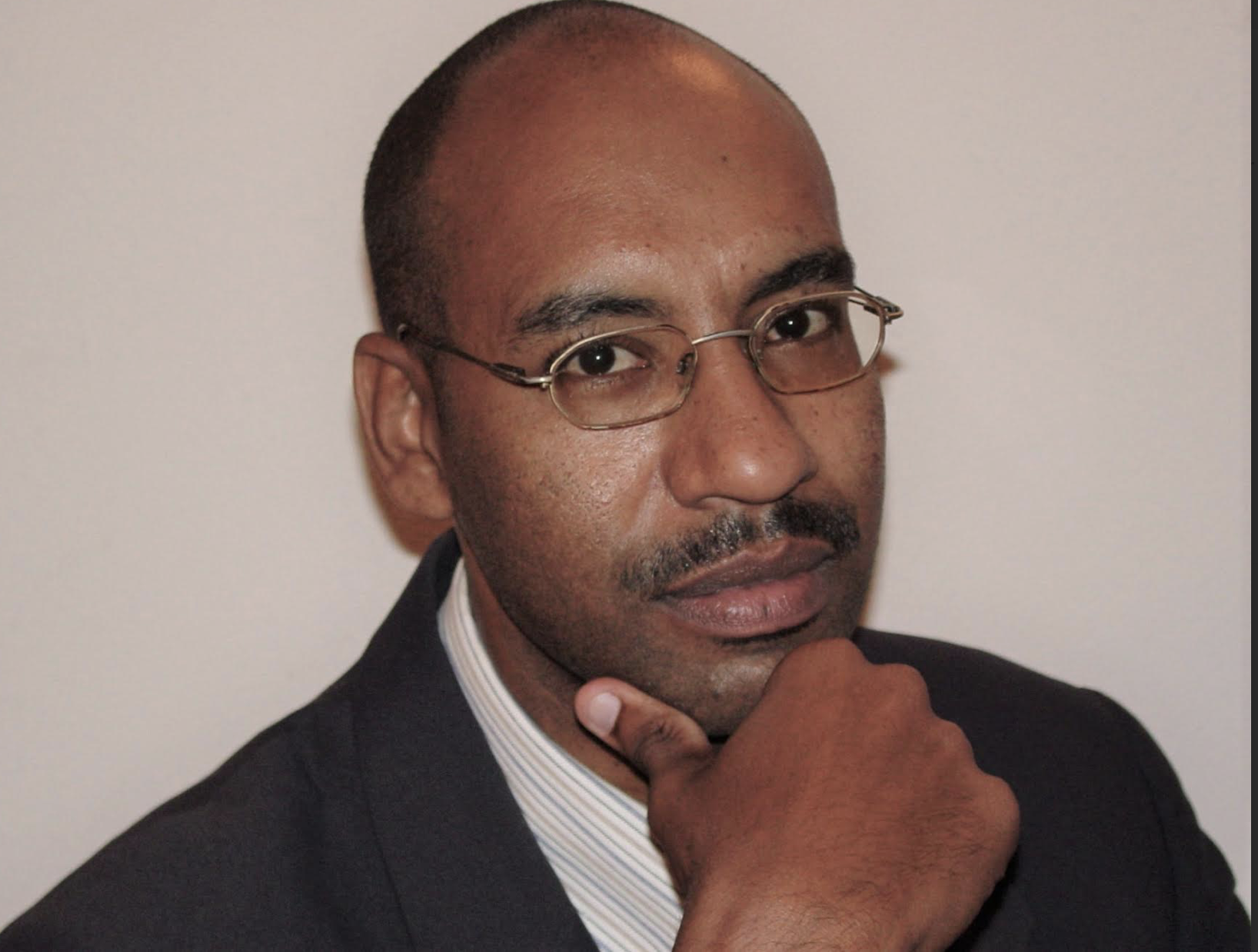
Hartley Henry – Principal Political Advisor to the Hon. Prime Minister

I am not in the business of forwarding emails to and fro, but a contact sent me an article a few days ago that made me both proud and a tad bit embarrassed as a Barbadian; knowing some of the flattering contents not to be true.

Calypsonians are always inviting us to differentiate “truth from lie” in the scenarios they outline. On this occasion, I wish to reproduce the referenced article and to invite you, Dear Reader, to honestly reflect upon those aspects of our educational system in Barbados that are correctly defined and others where, perhaps, our slip is showing and the conclusions drawn may be applicable more to yesteryear than to today’s Barbados.

Dear Reader, you reflect and you decide:

“By Nikole Hannah-Jones, a reporter for The US newspaper The Oregonian.

Danielle Ifill puts her hand on her hip and poses for her friends as she dons the evergreen mortarboard that signals her upcoming graduation.  In the auditorium of her worn-looking high school, Lester Vaughan secondary school, teacher Wilma Wiggins makes sure Ifill’s matching gown hangs the proper distance from the floor.

While Wiggins measures, the 16-year-old with mahogany skin and ebony eyes casts a wistful glance at the school yard she’ll soon leave. A few months from now, she’ll start a computer engineering program at the local polytechnic university. With a smile, she says she’s prepared, but nervous. “I’m going to miss it,” she says. “But I am ready.”

If this were an American tale, Ifill would likely be cast as an exception. The Black girl who made it out, who managed to find a place among the 56 percent of African-American children who graduate from high school, and the 40 percent of those who go to college.

But here in Barbados, this tiny eastern-most island of the Caribbean, Ifill’s story is instead the rule that defies notions of Black educational inferiority and underachievement. Barbados graduates 98 percent of its high school students; 53 percent go on to college. This 90 percent-Black nation not far from U.S. shores has the second-highest literacy rate in the world. With 99.7 percent of its population literate, it falls one–tenth of a point behind the three nations tied for first in the world: Cuba, Estonia and Poland (the United States is ranked 17th).

That this developing Black nation has managed to create a world-renowned education system offers a lesson for American schools entrenched in what seems to be an irreconcilable Black-White racial achievement gap: race doesn’t have to predict academic success. The key to Barbados’ success is four-fold—high expectations for all students, strict discipline, substantial education spending and a culture that embraces education as a form of nationalism.

“I cannot perceive of meeting someone in my society who can’t read,” says Dr. James Carmichael, a former secondary school teacher and computer scientist. “Education is part of the national  conscious.” Expectations for achievement are perhaps most illustrated by a nation’s willingness to spend money on it. Barbados funnels nearly a fifth of its national budget into education, and spends 6.9 percent of its entire gross national product on education, according to the CIA World Factbook, making it 24th in the world. The United States ranks 57th.

Students here attend school for free from pre-kindergarten to university. The government also provides free breakfast and lunch to all students, something the United States provides only to low-income students. But Barbados goes further in on key area: health care. Barbadians of all ages have universal free access to health care. If a child is sick, he or she can go to a neighborhood clinic near school for treatment. The schools have a referral system built in for children who need glasses or dental care.  “Students don’t have to stay home if they’re sick in Barbados,” says Dr. Dan C. Carter, a former official in the education  ministry. “This means they can be in the classroom learning.”

All of these factors help place Barbados first among developing nations on the United Nations’ Human Development Index, an indicator of not just a nation’s wealth, but its quality of life. For instance, the United States has the second highest GDP per capita in the world, but ranks 12th on the human development index. Quality of life indicators for African-Americans, such as life expectancy and infant mortality, rival that of some Third World countries. Tiny Barbados, in contrast, ranks 39th for per capita GDP but 31st among all nations on the quality of life index.

Another important factor that makes education work in Barbados is discipline. Diana Wilson, principal of the Lester Vaughn secondary school, calls it the “bedrock” of the school system. The disciplinary conditioning begins with school uniforms and ends with the distinct threat that if a student does something particularly bad he or she can be flogged with a bamboo cane. All students wear uniforms color-coded by public school. The skirts fall below the knees, no jewelry can be worn, nor any shoes other than plain black ones… The state pays for uniforms if parents can’t.  “Uniforms are a form of discipline,” Mary Ann Redman, the teacher’s union president, says. “They help remove class distinction and are less distracting.”

Teachers in Barbados are held in esteem and relationships between teachers and students are nurturing but formal. Disrespectful behavior isn’t tolerated, and teachers use several forms of discipline, including in-school suspension and even taking students to visit detention and drug rehab centers. But the ultimate tool in their disciplinary arsenal — one that is increasingly controversial worldwide — remains corporal punishment. Barbadians young and old recount the fear of floggings — a seldom-used but effective threat. “I had a caning once in primary school,” says Rudder, of the education ministry. “Never again. It was a deterrent for me.”

It’s unlikely U.S. schools would ever embrace such punishment. But other methods, such as uniforms, parent involvement and creating an environment of respect, Carmichael says, can be implemented and successful in certain American schools where, like Barbados, nearly every seat is occupied by a brown-skinned child.

“My mother preached to us every day, ‘You can’t get through life without an education,’ ” Danielle Ifill says at her graduation practice. “We hear it all the time from everyone.”

Hartley Henry is a Regional Political Strategist. He can be reached at hartleyhenry@gmail.com

Discover more from Barbados Underground

Subscribe to get the latest posts sent to your email.

14 responses to “Let’s Not Fool Ourselves”

  1. From one who knows!!! Avatar
    From one who knows!!!

    Grossly over-exaggerated I agree and certainly the figure of 98% of students graduating from high school is far from the truth.


  2. I live the difference between American schools and what I left in Barbados. It is no joke. Bajans don’t know what they have and are busy instituting every fancy so called educational best practice out of America to their eventual detriment. My wife and I found a charter school ( a private school funded with public money) that has an approach that they call “cutting edge” “designed for student success” and that ” differs significantly from public school approaches. The truth is that what they are practicing is what have been my wife’s and my experiences going to school in Barbados, except for the corporal punishment.


  3. Henry is over exaggerating , but at the same time there is a lot of truth concerning the standard of education offered in Barbados and its cost.

    The morons I teach can in no way compare with my peers in the 60’s or our top achievers today.

    But Henry how the canvassing comming along man, ya hypocrite. One of the funny things about our educational system is that it rewards jokers like you with big salaries and high achievers with real ideas about running Barbados are left on the sidelines because they are in the wrong party or in no party at all.


  4. Wow! Hartley must be scraping the bottom of the pot.
    Imagine him publishing an article that highlights Barbados being the No 1 on the UN Human Development Index. When the BLP said so during the last campaign the Dems were disparaging about this fact.

    Guess what goes around comes around.


  5. Henry
    Read the words of another Henry in todays NationNot the difference between a MAN & A MOUSE

    ALSO TELL ME WHAT PLANS THE DLP AND DONVILLE GOT TO IMPLEMENT ANYTHING LIKE THIS?…… BEFORE THEY DO IT OUT OF ANTIGUA.

    All the stupid offshore schools have to do is put money and men into the new hospital up there as this would sove some of their problems. BUt they are parasites without vision!

    Henry Fraser writes
    Barbados must find a place in the health care system for its well qualified young medical experts now being lost to other countries.

    In an interview with the Daily Nation, former Dean of the Faculty of Medical Sciences at the University of the West Indies Cave Hill Campus, professor Henry Fraser said there were “some sad losses in terms of the quality of brilliant people” who had completed post-graduate studies abroad but could not find a”post” at the Queen Elisabeth Hospital when they tried to return to the island.

    And he regretted governments “are not sufficiently flexible or visionary to take advantage of many of the really bright people who can create opportunities, who can be recognised as leading a development that the country needs.”

    Fraser said when government developed health care facilities in a specialised way, significant savings were realised, with patients not having to be sent abroad for the required care at exhorbitant costs.

    He also expressed a vision for the Queen Elizabeth Hospital and the UWI Cave Hill’s medical faculty to become “the Mayo clinic of the Caribbean.”

    “We have the potential, we have the location, we have the opportunity”, Fraser stated.

    Not only could the hospital serve the entire Eastern Caribbean, Fraser believed, “the income generation from serving the rest of the Caribbean would assist us greatly.”

    “While the cost of living index may have increased by ten per cent, the hospital budget has increased by only two-and-a-half per cent over 30 years,” said Fraser who has been associated with the hospital for over 40 years.


  6. This article is so much out of left field, in terms of the numerous important issues on the front burner in this country right now, it is clear that hartley is appealing for light, and he is doing so from the shelter of the pavillion…….afraid to even come out on the field of play.

    hartley has chosen to flee like the coward he is……….he has adopted for himself the same strategy that he formulated for all the Governments ministers…….. i.e. Don’t deal with any important issues that effect the country’s economy or the well being of the people……. just seek after photo opportunities and CBC DLP TV APPEARANCES and talk gibberish. Hide behind the illness of The P.M. and hope for the best!

    The writing on the wall hartley! I have deliberately not capitalized your name hartley.


  7. Well the to graduate here all one need to do is stay in school to year end of form 5 and they have graduated. Even so i think real percentage might be somewhere in the 85%-90% with the people who have been expelled for either causing trouble or stopping down so much that they never reached form 5. So I don’t really think it the same as the US. As for the article. As for the article only thing to really gather is the DLP need to keep funding education as the BLP did and don’t think about cutting uwi funding.


  8. Anthony the situation in the USA is far worse especially amomg blacks and the standard is poor.

    And now these idiots up here want you to have a Masters and PhD to teach teens stuff that we used to teach each other while doing A levels.


  9. i have no argument there. Just want HH know that cutting education budget will lead to a decline that will take years to correct.


  10. Education is just the process of acquiring knowledge; what is really important is how you apply that knowledge and the “opportunities” available to utilize it. . . without the latter dejection can soon ensnare the most committed.


  11. You are so right Yardbroom. There is nothing more frustrating thatn having knowledge and no opportunities to use or share it
    Dejection desperation and depression can indeed ensnare the committed!


  12. GP:
    That piece of self-diagnosis comes as a welcome change.

    Dejection, desperation and depression are all too close for those that do not follow the precepts or their proclaimed Lord and Master.

    Lack of recognition of your superiority by the hoi polloi appears to wear down the soul, even of the chosen ones.
    Disappointingly, to the point of the anti-Christian schadenfreude displayed by your revelling in the PM’s illness and likely comeuppance.

    As to no opportunities for today’s youth I have to disagree.
    In your day stymied bright kids had to leave the island to find appropriate employment.
    Now, in this internet age, the world is at everyone’s fingertips.
    And just as how you have grasped its power to convey your book learning (Medical and Religious) so today’s kids can apply their skills not only to furthering their education, but also earning a living.
    When reading a textbook to glean a couple of nuggets of wisdom probably took us a couple of days trawling, today we can all google and youtube our way to the
    that same information on any subject in seconds.
    Pity is that we do not have the facility of PayPal, the largest electronic payment system, here.
    Making it very difficult for the young entrepreneurs to monetize their potential.
    But whilst ever our leaders appear so frightened of technology and the freedom it brings, we will always be behind the curve, with desperate hands outstretched.


  13. It is amazing how Farley finds it’s necessary to make the news every single week. Why the principals of Harrison’s College or Queens College don’t be in the media lime light every single week. Maybe it is because they are busy educating the children and the results speaks for themselves in the CXC and Cape results. Sadly the Garrison can’t boast of such results so instead Farley has found another area to grand stand about and it is uniforms. I would really like to hear or see if the academic results of the Garrison have improved since Farley was appointed principal. If there were no improvement then I put it to you Farley that you are a failure. Focus on educating the children.


  14. Yes Straight Talk
    Dealing with 40 students per month online from your PC in your boxers @$150 per head does lead to a certain sense of dejection desperation and depression , as it gives one lots of time to read all the bovine excrement on BU inter alia

    And no, being overlooked by the jackases that rule your life in Barbados makes me rejoice. Do you know how hard it is to try to motivate absolute morons?

    When I think that I would have to get up daily and drive to a place of work to tell jokers how to do simple things that I advised them about three years ago, and which they cant implement, I ACTUALLY THANK GOD. You see I TEND NOT TO SUFFER FOOLS GLADLY

    I HAVE DEVOTED THIS YEAR TO THANKING HIM FOR EVERYTHING INCLLUDING ALL THE THINGS THAT I CANT UNDERSTAND.

    When a nation train its people and dont employ them, who you think loses?

    I am thinking of coming home and enrolling at UWI and do a Masters and PhD to keep the brain rolling and to put me in position into making much more $$$$ from my PC in my boxers. What you think? Its cheaper to do it at home and have it paid for by your tax dollars.

The blogmaster invites you to join the discussion.

Trending

Discover more from Barbados Underground

Subscribe now to keep reading and get access to the full archive.

Continue reading