โ† Back

Your message to the BLOGMASTER was sent

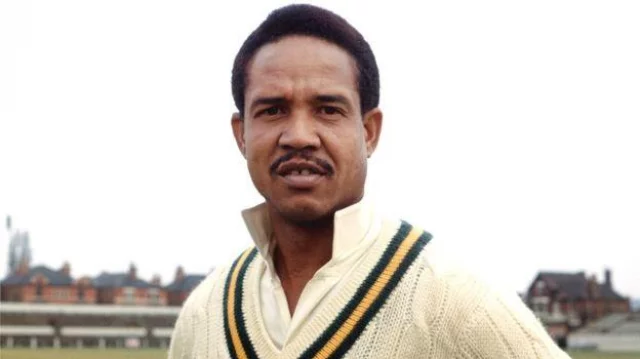
Sir Neville Nicholls – Chairman of the FTC and SEC

(6) The Commission (FTC) may on its own initiative or on the request of any person carry out any investigation that it considers necessary or desirable in connection with matters falling within the provisions of this Act, the Utilities Regulation Act, and any laws relating to consumer protection and fair competition which the Commission has jurisdiction to administer โ€“ Fair Trading Commission Act

When the Fair Trading Commission (FTC) was established in 2001 so much was promised by the previous government of the leadership it was expected to exert onย  how Utilitiesย  were regulated in Barbados. For many years before that it had been the publicโ€™s perception that Utilities operated to the beat of their own drums. Since the establishment of the FTC inย  2001 nothing has changed to reshape that perception. The Utility which has attracted the greatest ire from Barbadians has been LIME formerly Cable and Wireless. Perhaps what has stung Barbadians the most is the fact jobs have been relocated to St. Lucia and other low cost based islands. This is after decades of Barbados being the cash-cow for Cables & Wireless in the hemisphere. Even if Barbadians were persuaded to finally accept LIMEโ€™s, formerly Cable & Wireless restructure, the promise of enhanced customer service as a result of the changes has been elusive.

Barbados Today carried a funny piece last week which poked some fun at the online customer support which kept advising users to visit LIME’s Windsor Lodge Office to seek resolution.


Barbadians are still pissed at LIMEโ€™s decision to sever employees at the beginning of the global recession. A great betrayal to the tripartite/social partnership and Prime Minister David Thompsonโ€™s request to hold strain. Yes LIME had no regulatory obligation to be sensitive to the request of the Prime Minister or the social partnership but was there the hint of a moral obligation?

The great disappointment to date has been the lack of a proactive stance by the FTC on behalf of Barbadian consumers. Is it correct to say that all of the times the Utilities have approached the FTC they have walked away with close to what they applied for? Have you sensed the same diligence coming from the FTC regarding measures to protect Barbadian consumers?

Of interest to BU has been the action of Ofcom in the United Kingdom; the independent regulator and competition authority for the UK communications industries.ย  Ofcom unlike its counterpart in Barbados proactively undertook a market survey to determine the average residential broadband speed. In Barbados we have heard many complaints from consumers about sluggish upload/download ADSL speeds. The current system makes it very difficult if not tedious for consumers to build a good case against LIME to proveย  poor ADSL service. What we know is a lot of the copper network in Barbados is old plant and must* be contributing to degradation of broadband service in Barbados. The Barbadian telecommunication consumer needs help from an entity with the clout and resources to scope the problem in Barbados and insist on corrective action by LIME. The FTC needs to get up off their lazy overpaid asses and protect LIME consumers. A visit to Ofcom to eyeball what they have been doing is in order if the FTC is ignorant about next steps.

Sir Neville for godsake do something to help consumers!

In an attempt to improve how broadband is sold, Ofcom has been pushing ISPs to adopt a new code of practice, which will mean consumers get more information about speed as they sign up for a new provider. The code is due to come in over the next 12 months and all the UK’s larger ISPs have signed up for it.

Few Britons get the broadband speeds being advertised suggests research. It will mean that, instead of being given a single figure, consumers will get an idea of the range of speeds their line can support. This will be provided as a “durable record” so there can be no dispute if reaching an estimated speed proves elusive.

BU has always been wary of the MOU arrangement between then C&W and the government which occurred at the onset of telecommunications deregulation in Barbados. There was a good relationship which many Barbadians know existed between former C&W CEO Trevor Clarke, COO Vince Yearwood and Human Resource Manager John Williams. Was there a backroom deal?

Facebook users should feel free to subscribe to the LIMES SUCKS page to record their concerns. There is always strength in numbers.

If telecommunications can agree to Codes of Practice in the UK and other markets why not Barbados.


Discover more from Barbados Underground

Subscribe to get the latest posts sent to your email.

59 responses to “Clarity Needed In Broadband Speed Sold By LIME In Barbados”


  1. I agree that if Barbados is to bridge the digital divide it must establish greater reliability, certainty, and economy in the use of the ICT platform as the launching pad into Twenty-first century development. Regulatory agencies like the FTU must play a critical role as the gatekeepers in this process.


  2. @ David

    I think it might be useful to have HOME PAGE in banner…no?


  3. @BAFBFP

    Not available in this Theme.

    Click on the Masthead/BU Banner to get Home Page.


  4. @George

    Glad you agree.

    It would be useful if Barbados can get the LIME and to a lesser extent the other telecommunications companies onboard to support a low cost ADSL platform. For example, the new business we could generate from building an indigenous transcription sector. All of our professionals i.e. lawyers, doctors, engineers could become a captive market to transcribe their paper files to digital. Note we did not even mention government. So many opportunities but we are stuck playing the old games.


  5. Put official smiling photo of Sir Neville Nicholls, Sir Fred Gollop side by side and not see resemblance..? Som ting wong… these men no smile, these men grin…! Face that you see not true face…no? These men no represent consumer, men represent and protect investors ..no?

    Incidentally unofficial photo (Sir) Leroy Parris in BU Banner no show smile… Show grimace ..no?


  6. @ David

    Very sad that you explain banner function.. Very sad, for now man from East might be recalled for not seeing obvious thing… not good not good..no?


  7. @BAFBFP

    Don’t worry, will post a note when the changes settle.


  8. Good article David but ya know what, lime will continue to get away with murder. Protest or no protest LIME continues to give us a sour deal and the FTC has proven themselves to be ‘takers; rather than ‘doers.’ How else can you explain their (FTC) nine year hiatus. Jokers


  9. @All

    Yes our FTC has been established with the relevant laws. Is there a role for the government to play to fine tune the thing?


  10. Quotation for the use of broadband internet to stream a conference; one day only or any part thereof: $4,000.00


  11. I am aware of consumers of sour LIME, that pay for 2MBs or more of download speed and when speed checks are done even by sour LIME techs the speed if below 600KBS… What is sour LIME’s response, sorry we can’t guarantee download speed… maybe the consumer should not guaranteed payment.. many subscribers to sour LIME have realised how much they are bing ripped off thanks to the new net2vu service which depends on a minimum download speed. What does FTC say about this issue “sorry we do not regulate internet providers” maybe they should!


  12. The FTC does not regulate internet providers because there is supposed to be competition in this area. If there is not effective competition in this area then we need to understand why. Why aren’t LIME’s competitors stepping in to satisfy this market need?

    If the answer leads back to the FTC then we need to understand exactly what the issues are and what it is the FTC should be doing that they have not done.


  13. @Brutus

    It is known that LIME continues to monopolize the ADSL and land line segments of the market. Telebarbados and Digicel as far as these two segments go are niche players. This has been the case for a long time now.

    So what is government waiting for?

    What competition what!?!


  14. @Brutus: “The FTC does not regulate internet providers because there is supposed to be competition in this area. If there is not effective competition in this area then we need to understand why.

    There is technically competition in Internet Service Providers (ISPs). But not real effective competition.

    The reason for this is for two fundamental reasons:
    1. The lack of access to the copper plant to competitors (known as Local Loop Unbundling).
    2. The lack of a cabled (coax) television network on the third position of the Barbados Light and Power pole network.

    Because of this, only LIME have access to a wired “last mile” to the customer — competitors must use wireless links, which are inherently limited in their bandwidth. (All bandwidth possible from an Access Point in the spectrum channelization is shared between all subscribers.)

    Technically, because TeleBarbados were effectively bequeathed the third pole position by an associated company (BL&P), they could provide wired (or fibre-optic) service to consumers. But the reality is they only use the poles for corporate customers and their own base stations and back-haul. A tragic squandering of a public good, IMHO.

    And, yes, this all comes back to the FTC and the Telecommunications Unit.

    The FTC *could* and *should* have taken a more proactive approach to the pole position allocation issue, which I’ve raised many times.

    And, ironically, the issue of Local Loop Unbundling was the next item of business the Telecommunications Act Revision Committee (TARC) had on its agenda.

    Remember the TARC? The committee which brought you the Barbados VoIP Policy, the Two Stage Dialing Policy and the Equal Access and Indirect Access Policy — the latter two of which the FTC is refusing to enforce.

    Remember the TARC? The committee which David Thompson disbanded earlier this year after it had only met once in the last two and a half years….


  15. @Christopher Halsall – thanks, I was hoping you would respond.

    Now we need to demand action/answers from the responsible parties.


  16. @All… Let’s look at another area where the FTC has failed to protect the interests of consumers… Long Distance / International Telephony.

    (My apologies if this is all rather technical, dry and boring — but it is, IMHO, important to everyone.)

    During the “liberalization” process, there were three phases — all of which were related to Telephony (voice-based telecommuncations; read: phone calls).

    The FTC approved three different Reference Interconnection Offers (RIOs) submitted by C&W for each phase. A RIO is a standard interconnection contract which the Incumbent Local Exchange Carrier (ILEC) must make available to any requesting Competitive Local Exchange Carrier (CLEC).

    However, C&W failed to define an “Outgoing International Call Termination (OICT)” “Service Description (SD)”, even though they did include an “Incoming International Call Termination (IICT)” SD. Hmmm…

    It is minuted from the TARC meetings that an OICT SD would be *required* to enable the Indirect Access and Equal Access Policy. FTC representatives were present at TARC meetings and received the minutes.

    This topic has been discussed in the traditional Fourth Estate here in Barbados. Please see, for example, Enforce the telecommunications legislation.

    So the FTC finally consolidate the RIOs into one RIO last year. A public hearing on the matter was held.

    Was an OICT SD in the new RIO? No… Hmmm…

    What does this mean to you?

    It means you are paying more for international calls than you should. But perhaps more importantly (for complicated reasons I won’t bore you with here, but which you can find explained on my Blog) it is more expensive for those “away” to call you than it is for those “away” to call many others…

    Hmmmm….


  17. @Christopher Halsall,

    Did the FTC give a reason for not including the OICT SD in the new RIO?


  18. @Brutus: “Did the FTC give a reason for not including the OICT SD in the new RIO?

    The answer given during the TARC meetings by both C&W and the FTC was that “Outgoing Calls were never envisioned”…

    Please note that as of this next October, under the WTO agreement which Barbados signed, full liberalisation (including OICT ST) will be obligated.

    It is, IMHO, rather sad that it will take foreign influences to make Telecommunications liberation a reality here in Bim….


  19. @Christopher Halsall

    What about in the decision after the public hearing which you mentioned? Surely the potential competitors raised this issue and surely the FTC responded?

    Do you mean October 2010 or October 2011? That is still good news isn’t it?


  20. @Brutus

    Every which way you twist it the FTC supported by the legislation needs to step up.


  21. @Brutus: “What about in the decision after the public hearing which you mentioned?

    I have already said this — and it is public knowledge. The new RIO has no OICT SD.

    @Brutus: “Surely the potential competitors raised this issue and surely the FTC responded?

    You are correct in the first part. And you would have thought you would have been correct in the second part.

    But for some reason which is unfathomable to some, the FTC did not “step up” on this issue, but instead simply bent over….

    @Brutus: “Do you mean October 2010 or October 2011?

    I mean this next October… Read: 2010.10.01; read two months from now….

  22. Barnabas Collins Avatar
    Barnabas Collins

    We are a reactive society and hence we don’t protest anything until it get to the point of no return. Internet/telephony services suck in Barbados. All over the world, internet rates are going down and in Bim there are going up and the service quality going down down down down. These carriers here seemed to have over subscribed their platforms which results in a degradation of service. I pay for a 2MB ADSL, yet sometimes I download stuff at 20KB which is ridiculous. If you call them they give you this song and dance about not being able to gaurantee anything in a St. Lucian accent to boot. But if you think that LIME is bad which they are, the other guy is not much better. They were offering a 2MB line and they have discontinued the offer because of the apparent subscribers. Which begs the question, what sort of outdated platforms are both of these carriers using.
    Recently, I read that LIME would be offering 8MB lines but what is the sense of purchasing such a service when one still has to sit and wait on Google to load….In Trinidad where there is true competitiveness, FLOW are now offering 20MB pipes to the internet for about 60BDS….And we are paying hundreds of dollars for crappiness and they think they doing us a favour. LIME (Less Internet More Excuses) and Telebarbados need to get real but in Bim money talks so I don’t expect any government official from any of the parties to insist on bajans getting better service from our internet providers. They are going to make some veiled attempts and that is it.

    I think we need another service provider like FLOW to come to barbados so we can start getting Internet services. I look forward to the debate.


  23. I am /was one of LIME customers who was given the 8Mb on trial ,free for 1 month, after I had just upgraded from 1 Mb to 1.5 Mb as recommended by NET2VU. To be quite honest, the upgrade to 1.5Mb and the 8Mb, made very little ,if any to the computer speed ,or the constant buffering on Net2VU. My computer still tells me that its speed is 100Mb,even with the 1.5 and 8 Mb upgrades. Are we getting what we are paying for?


  24. Cable and Wireless and Barbados Light and Power big big big contributor to political parties ..no? Very much like Jada and Clico and Simpson and my family… This democracy in action..ho ho ho


  25. Wonder very much who voted “Yes” and “Don’t Care” in above poll…

    … Donald, me no know that you be BU fan… What your handle is …

    … Allex that be you..?

    No no, maybe it be Stedson or some other Starcom Sycophant ..no?

  26. Concerned Bajan Avatar

    @Bosun

    Think about it. You are LIME and you are planning to offer subscription TV as part of your brand (The “E” they say it is entertainment, I say “Excuses”). Therefore, they will throttle your connection to the net anytime they see that you are streaming media so you become frustrated and discontinue “NET2VU”. That is it plain and simple. This is the competitive nature of LIME. Actually, I heard that the head of the Telecoms unit is a former LIME employee and that LIME runs the telecoms unit so NET2VU offer of TV is dead in the water.
    The FTC will not get involved because they are a toothless bunch and we all know that. Meantime, the natives wrestles with poor internet services and LIME rakes in the dough.


  27. @Barnabas Collins: “Recently, I read that LIME would be offering 8MB”

    Maybe why I was given such a speed increase but I only get as far as 5.0mbps. It is good until they revert back to 2mbps download. I could wonder how they can manage that when we’re heavily subscribed on a network.

    It is just a disappointment. It is, no doubt business as usual from C&W/LIME.


  28. @Barnabas Collins: “I think we need another service provider like FLOW to come to barbados so we can start getting Internet services. I look forward to the debate.

    Flow (Columbus Communications) were considering coming here to Barbados — right up until they discovered that there isn’t a co-ax (wired) television network here.

    As I tried to say above, until and unless there is an alternative last-mile wired link to the consumer (usually a co-ax / fibre hybrid television link (not the one-way wireless MMDS “Multi-Choice” CBC service)) and/or Local Loop Unbundling of the copper telephone pairs is implemented here, we will *never* have real competition for high-speed Internet.

    I raised this issue during the BL&P Rate Hearing. I additionally made this point privately to the Commissioners to explain why I was spending so much time on the “pole issue”. But it fell on deaf ears….


  29. @Chris

    Your last comment is interesting.

    Can we (Barbados) really say to the world we have a telecommunications market which is deregulated?

    If the answer is no who is responsible for making it so?


  30. @Brutus: “What about in the decision after the public hearing which you mentioned? Surely the potential competitors raised this issue and surely the FTC responded?

    My above answer to this question was rather flippant — my apologies.

    To speak to this a bit more technically, may I please refer you to the FTC’s decision. Specifically paragraphs 28 through 30.

    Quoting paragraph 29: “The Commission has found generally that two-stage dialling and indirect access have not been directly accommodated under RIOs. The Commission notes that Cable & Wireless has requested a review of Government’s two-stage dialling and Indirect Access policies. The Commission is of the view that under the Telecommunications Act CAP. 282B definition of interconnection, which refers to licensed carriers, two-stage dialling and indirect access would not be considered as interconnection.

    This, IMHO, demonstrates either a complete lack of understanding of competitive telephony implementations, or blatant dishonesty. Two Stage Dialing, Equal Access and Indirect Access are *all* *about* interconnection, which is why it took the TARC months of work to converge on agreement of the definition for same!!! (Note that all licensed telephony carriers, and the FTC, were members of the TARC.)

    Further, please note that at no point in the Decision does the Commission mention Equal Access, even though the matter was raised by the licensed carriers who responded (Blue Communications, TeleBarbados and Digicel).

    This is somewhat ironic, considering that the Policy in question is called the Barbados Equal Access and Indirect Access Policy.

    Lastly, with regards to “The Commission notes that Cable & Wireless has requested a review of Government’s two-stage dialling and Indirect Access policies.” — I have personal knowledge of this which I cannot speak about publicly. But I advised the Commission privately that they should ask the Telecommunications Unit for correspondence on this request for review.


  31. @Christopher Halsall,

    What is “local loop unbundling of the copper telephone pairs?”

    Also, you seem to be saying that competition in internet services is restricted because of :

    “2. The lack of a cabled (coax) television network on the third position of the Barbados Light and Power pole network.”

    To your knowledge have any complaints been lodged with the FTC by any company trying to get access to BL&P’s pole network, and if so, what was the FTC’s response?

    Are you suggesting as well that this third position on the pole network would be available to all potential competitors, assuming this is possible?


  32. @David: “Can we (Barbados) really say to the world we have a telecommunications market which is deregulated?

    No.

    @David: “If the answer is no who is responsible for making it so?

    Fundamentally, the GoB. Specifically the Barbados Telecommunications Unit (BTU) (under the Ministry of Finance, Investment, Telecommunications and Energy) which defines policy, and the Barbados Fair Trading Commission (FTC) which (is supposed to) enforce said policy and regulations.

    And this is actually part of the problem — because you have two different groups involved, what is found by those trying to “play” in this space find themselves being bounced between the BTU and the FTC.

    To be pedantic, at the end of the day it also comes down to commercial businesses to actually take the risks and implement the services. But they can’t do so unless the regulatory framework is in place to allow them to compete fairly.

    Lastly, let me please repeat what I said above… In less than two months time the WTO grace period for true telecommunications liberalization will elapse.

    Sadly, I suspect it is going to take an international challenge under the WTO to actually get things moving here. I’m betting one or more Canadian, USA and British Off-Shore businesses will complain to their government(s) about how they’re being disadvantaged because of the lack of true competition here. Said government(s) might then raise the issue with the WTO.

    I say sadly because Barbados has had more than ten years to do this ourselves; for our own advantage and advancement….


  33. @Brutus: “What is โ€œlocal loop unbundling of the copper telephone pairs?โ€

    Let me please refer you to Wikipedia: Local-loop unbundling. But in the short form, it requires the ILEC (C&W in this case) to provide to a competitor access to the copper pairs over which telephony (telephone) and ADSL (Internet) services can be provided. This is generally priced to the competitor at the same rate that the ILEC charges itself.

    @Brutus: “To your knowledge have any complaints been lodged with the FTC by any company trying to get access to BL&Pโ€™s pole network, and if so, what was the FTCโ€™s response?

    Confidential knowledge I cannot share publicly.

    @Brutus: “Are you suggesting as well that this third position on the pole network would be available to all potential competitors, assuming this is possible?

    Generally, no. Generally the third pole position goes to a single provider. But, importantly, that single provider offers services to both residential as well as commercial customers. Not just commercial customers, as TBB do.

    (Importantly, please note that just about any electrical pole network is considered a “public good”, since it is paid for by all consumers of electricity, and thus all people should benefit from it as much as possible.)

    The second pole position, on the other hand, which is almost always occupied by the ILEC telephony provider, is “shared” only in so far as competitors have access to some of the wires which utilize it by way of LLU, and the temporary usage enabled by alternative long distance / international dialing options defined within Two Stage Dialing, Indirect Access and Equal Access.


  34. Funny thing when Michelle Goddard and Vivianne Gittens and Ronald Toppin and Chairman resign from FTC and Ministry nobody question new guy on job and motive of new guy and team…!


  35. @Christopher Halsall,

    Thanks for your explanations – I think I follow.

    There are two options to open up competition in internet access:
    (1) The second position on the BL&P poles currently controlled by C&W. The FTC has refused to intervene and has basically passed the buck back to Government. Government so far has failed to act.

    (2) The third position on the BL&P poles, currently controlled by TeleBarbados who are NOT using their access to the greatest benefit of residential users. The FTC has also refused to intervene here.

    Did I get it right?

    It seems that option (1) above is the one that should be pursued most diligently as that opens up possibilities for all competitors. Option (2) will just benefit one additional party.


  36. @Brutus: “Did I get it right?

    Mostly.

    @Brutus: “It seems that option (1) above is the one that should be pursued most diligently as that opens up possibilities for all competitors. Option (2) will just benefit one additional party.

    Agreed.

    But option one requires that the GoB (read: the BTU) gets serious about the TARC’s replacement.

    Option two would have a greater effect than you might think — but then, that ship has already sailed…

    But, let us please come back to the FTC for a moment, and their decision on the RIO — a matter they were solely responsible for, since the BTU had already done all the work required…

    1. The FTC had an opportunity to enable competition in international calling.

    2. The Policy was defined (by the TARC under the BTU).

    3. All they had to do was define an OICT SD in the RIO, as they were advised they needed to do.

    3.1. Or, at least, insist that C&W include a definition for before they approved it.

    4. This was not done.

    Quoting again from the FTC decision on the RIO, paragraph 30: “The Commission has determined that Cable & Wireless will not be required to include terms related to these services [Two Stage Dialing, Equal Access and Indirect Access] in the Consolidated RIO. The Commission however reserves the right to consult on this matter at a future date. [emphasis mine]

    Let us all please pray that the Commission exercises its reserved right sooner rather than later….


  37. @Chris

    The FTC is a creature of government. Is there any opening in the legislation to receive central government intervention?


  38. @David: “The FTC is a creature of government. Is there any opening in the legislation to receive central government intervention?

    A very interesting question, to which I cannot speak. (I’m a geek/nerd/tech; not a lawyer.)

    Hopefully those amongst us who are more learned can and will speak to this question.

    Here’s an additional question: if you don’t receive satisfaction from the BB.FTC, who do you appeal to?


  39. @Bosun who wrote:
    My computer still tells me that its speed is 100Mb,even with the 1.5 and 8 Mb upgrades.

    Most likely the 100mb connection you’re seeing in the System Tray on your desktop is your LAN card which you have connected to your ADSL modem by ethernet cable. If you want to get a reasonably accurate idea of what your downloadupload speeds are at any particular point in time, download and install Speedplexer from http://www.speedplexer.com.


  40. Ah… So much to be said in favour of State control enterprise… may offer Third Class service, but consumer pay Fourth Class price..no? Better than paying First Class price for Third Class service … and No Class recourse ..no?


  41. In light of this discussion regarding how deregulation of telecommunications is impacting us here in tiny, dot in the ocean Bim, some may find this interesting. Paul Craig Roberts, Assistant Secretary of the Treasury in the Ronald Reagan Administration and a former Wall Street Journal editor and columnist, rues the day deregulation was introduced in the US telecommunications industry:

    “Unregulated Greed has Destroyed the Capitalist System”: The Big Things That Matter And The Little Things That Annoy

    By Paul Craig Roberts

    snip

    Often, however, it is small annoyances that waste Americansโ€™ time and drive up blood pressures. One of the worst things that ever happened to Americans was the breakup of the AT&T telephone monopoly. As Assistant Secretary of the US Treasury in 1981, if 150 percent of my time and energy had not been required to cure stagflation in the face of opposition from Wall Street and Fed Chairman Paul Volcker, I might have been able to prevent the destruction of the best communications service in the world, and one that was very inexpensive to customers.

    The assistant attorney general in charge of the โ€œanti-trust caseโ€ against AT&T called me to ask if Treasury had an interest in how the case was resolved. I went to Treasury Secretary Don Regan and told him that although my conservative and libertarian friends thought that the breakup of At&T was a great idea, their opinion was based entirely in ideology and that the practical effect would not be good for widows and orphans who had a blue chip stock to see them through life or for communications customers as deregulated communications would give the multiple communications corporations different interests than those of the customers. Under the regulated regime, AT&T was allowed a reasonable rate of return on its investment, and to stay out of trouble with regulators AT&T provided excellent and inexpensive service.

    snip

    But this is a different story. To get back to deregulation, nothing has worked for the consumer since deregulation. Deregulation permitted corporations to impose their costs of operation on customers without having to send them a bill. For example, corporations use voice recognition technology to keep customers from salaried customer representatives. I remember when a customer with a problem could call a utility company or bank and have the problem immediately corrected.

    No more. There was an error in my phone bill today, which I had corrected without result on two previous occasions. As everyone knows by now, it takes 10-15 minutes, usually, to get a live person who can actually fix the problem. After listening to sales pitches for 12 minutes, I got a live person. Once the problem was understood, it was pronounced to be an upper level problem out of his hands. I waited another 10 minutes while he tried to reach a superior who had the code to fix the problem that the phone company had produced in my account. The entire time I listened to product advertisements.

    How many times has this happened to you?

    Whoever invented these artificial voice capabilities is the enemy of mankind. Whomever a customer calls–utilities, credit card companies, banks, whatever, the customer gets a voice machine. Some voice machines never tell the customer how to get a live person who can, on occasion, actually fix the problem.

    In my opinion, the strategy behind the endless delays is to cause the customers to give up, slam the telephone down and play the higher incorrect bill as it is cheaper in time and frustration to correcting the problem and being billed in the correct amount. These ripoffs of the customer are produced by Wall Street pressures for higher earnings.

    snip

    Deregulation proponents will say that the breakup of AT&T gave us cell phones and broadband, as if foreign regulated communication companies and state monopolies do not provide cell phone service or high speed Internet connections. I can remember attending corporate board meetings years ago at which the European members had digital cell phones with which they could call most anywhere on earth, while we Americans with our analogue cell phones could hardly connect down the street.

    What deregulation did was to permit Wall Street to push the deregulated industries– phone service, airlines, trucking, and later Wall Street itself– to focus on profits and not on service. Profits were increased by curtailing service, by pushing up prices and by Wall Street creating fraudulent financial instruments, which the banksters used Americaโ€™s reputation to market to the gullible at home and abroad.

    snip

    Conservatives and especially libertarians romanticize โ€œfree market unregulated capitalism.โ€ They regard it as the best of all economic orders. However, with deregulated capitalism, every decision is a bottom-line decision that screws everyone except the shareholders and management.

    In America today there is no longer a connection between profits and the welfare of the people. Unregulated greed has destroyed the capitalist system, which now distributes excessive rewards to the few at the expense of the many.

    http://globalresearch.ca/index.php?context=va&aid=20587


  42. @Green Monkey… An interesting point of view. One I don’t agree with, mind you, but interesting none the less.

    An critical point however — there’s a very important difference between deregulation and liberalization, even though these words are often used synonymously.

    I, personally believe (and many far smarter than me agree) that true competition (not monopolies, duopolies or oligopolies) tends to drive down costs, improves service quality, and increases service offerings to consumers.

    Regulation is still required — to ensure that initially new entrants are able to compete fairly. And later to ensure that the competitors don’t start colluding to fix prices.

    There are a few “natural monopolies” where it makes sense for there to be only a single provider — electrical power transmission (but not generation), for example.

    Telecommunications is not a natural monopoly.


  43. Midweek Nation Wednesday August 11,2010 (15A)
    Tele (Barbados) Inc
    Having received no suitable applications in response to
    the advertisement for Vice President-Sales & Marketing,which ran in the Barbados Advocate on November6,2009 ;November 10,2009; November 13,2009;and November17,2009 and the Nation Newspaper on November7 2009,November 10 2009, November 14 2009 and November 17,2009, we intend to apply to the Chief Immigration Officer for a work permit for a Foreign National to fill this position.
    If anyone objects to the applications for work permits write to the Chief Immigration Officer no later than August 31,2010.


  44. @Nationalist…

    Thank you for bringing that forward.

    Just wondering if anyone in the “know” can tell us all what the time limit is between an advertisement for a position and when a foreigner can be given a work permit?

    These advertised opportunities were nine months ago.

    Tele (Barbados) didn’t get a single “suitable application” in all that time?

    What are they asking for? Someone who can speak all human languages, are fluent in calculus, and can prove that P != NP?

    Shouldn’t they re-advertise the opportunity before offering it to a (likely directed) foreigner?

    Will the foreigner be able to satisfy all the requirements which the Bajan applicants couldn’t?

    Because I have reason to believe at least a few Bajans could fill the role (for the record, not me), particularly at the salary and perks likely offered….


  45. @ Chris Halsall.It is also possible that no local applied, given the way that a young engineer was seduced from his substantive job at the sister company to come over to them, when they first started out, only to be used and dumped some months after, when they had got what they really wanted out of him.Luckily he was taken back by the sister company.


  46. @Nationalist: “It is also possible that no local applied, given the way that a young engineer was seduced from his substantive job at the sister company to come over to them, when they first started out, only to be used and dumped some months after, when they had got what they really wanted out of him.Luckily he was taken back by the sister company.

    That is indeed a possibility.

    I personally worked beside the “young engineer” you are likely referring to, while we were both employed by TBB.

    The “young engineer” is a *very* serious individual. TBB made a mistake in how they treated him; BL&P should be thankful they were able to re-employ him….


  47. The point we have not discussed in any detail is the vested interest the government should have in reducing telecommunications costs in Barbados. Especially any government with a focus on reducing the cost of living. Telecommunications costs represents a significant expense for most businesses.


  48. @David: “The point we have not discussed in any detail is the vested interest the government should have in reducing telecommunications costs in Barbados.

    Absolutely true.

    But another dimension to this is the inflated costs those “away” have to pay when telephoning us in Barbados. It limits our competitiveness.

    For technical reasons I won’t go into here, while the ILEC is allowed to carry almost all outgoing calls it means that incoming calls will be reciprocally expensive.

    This can only mean that many potential customers call others, rather than us….


  49. @Chris

    Can you explain why FLOW has refused to enter the Barbados market again? Notice that they have entered the Jamaica and T&T markets in a big way.

    Regarding the Telebarbados ad it seems the fat cat they hired from LIME did not work out. Must confess Telebarbados has been a big disappointment.


  50. @David: “Can you explain why FLOW has refused to enter the Barbados market again?

    They didn’t refuse to — they chose not to. An important difference.

    From what I understand, the primary reason was the lack of a co-ax video delivery network already being in place here in Barbados (an unusual situation globally).

    @David: “Must confess Telebarbados has been a big disappointment.

    Absolutely agree.

    To the sadness of all of us who were retained for its birth. But then the “American’s” took over, and the rest is history….

The blogmaster invites you to join the discussion.

Trending

Discover more from Barbados Underground

Subscribe now to keep reading and get access to the full archive.

Continue reading