← Back

Your message to the BLOGMASTER was sent

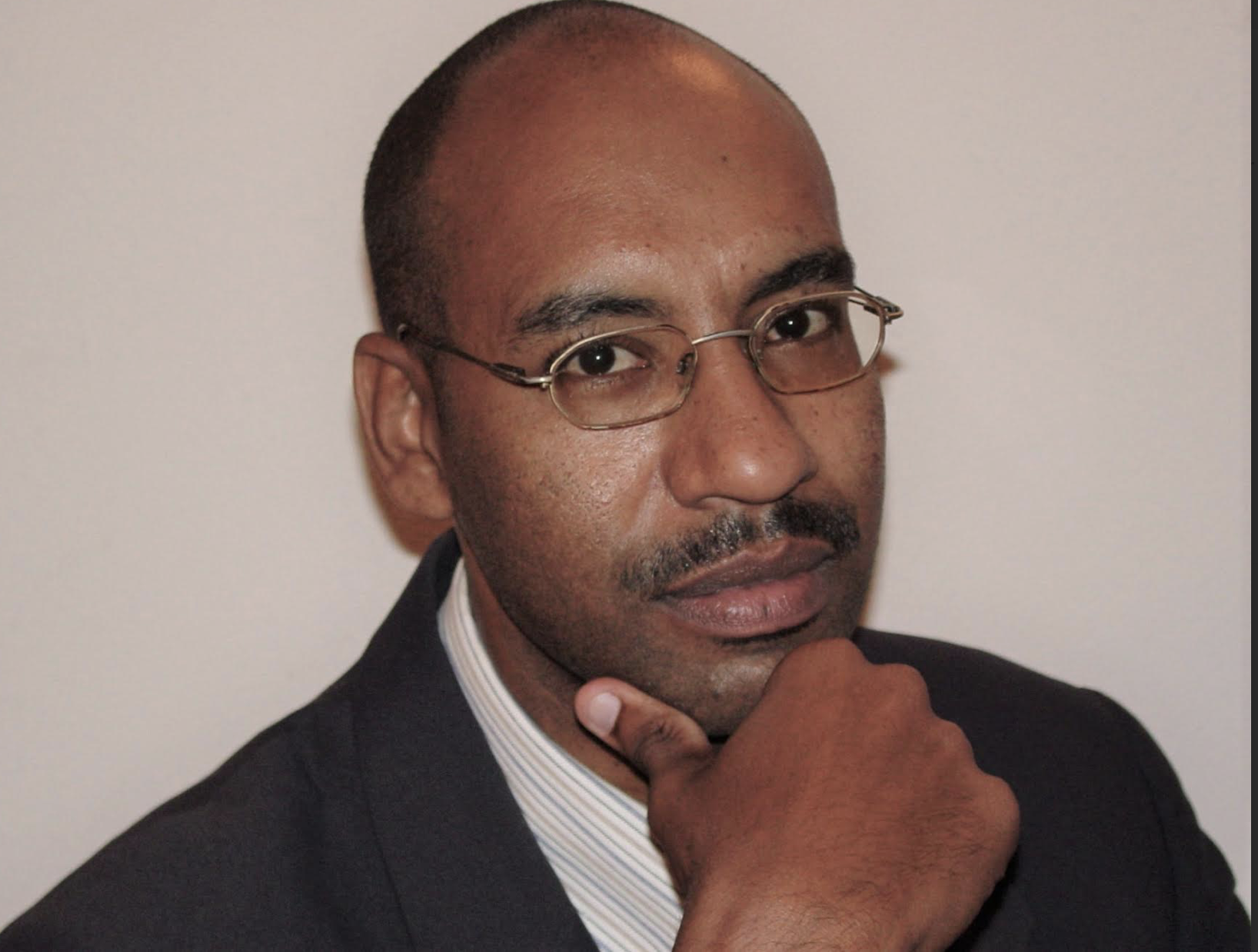
Peter Allard

BU recently updated on the Nelson Barbados Group matter which was recently concluded in the Canadian Court. The Honourable Justice B. Shaughnessy who presided was very scathing in his closing comments directed at the Plaintiff. The transcript of the windup makes for interesting reading. Of note to the BU family is the likelihood this matter will continue in the Florida Courts and possibly Cyprus!

Here is the transcript – 36 pages of the closing (BU Library) which is recorded in easy to understand prose.



Discover more from Barbados Underground

Subscribe to get the latest posts sent to your email.

32 responses to “Update – The Secretive World Of Peter Andrew Allard Part V”


  1. I have read the document posted here. A few points come out with startling clarity:

    * The very high calibre of this judge. His insightfulness and his humanity. Barbados could do with a couple of judges like him. He is right when he speaks of the damage this lawsuit has done – to the reputations and psychological well-being of completely innocent people. Vindicated they are, but what they have been put through by this Allard and the Knox family is unforgiveable. For what we, the people of Barbados, have been put through, there is no excuse.

    * Donald Best remains a fugitive from justice. That is going to be extremely difficult for Mr. Best. There is no appeal and he will have to confront the judge and any eivdence he may provide will become evidence in the case and therefore can be entered in any jurisdiction, including Barbados.

    * The fact that clearly a complaint has been made (or is to be made) to the Law Society of Upper Canada. In connection with this, may I respectfully suggest and urge the Barbados defendants to ask for a certified copy of this complaint and use it as the basis of a complaint to the Barbados Bar against Alair Shepherd, whom I now REFUSE to accord the title of Q.C. – he is a disgrace to the profession and ought now to be stripped of his Royal Commission in right of Barbados. A lawyer who acts in a manner so detrimental to Barbados, has no right being one of Her Majesty’s counsel for Barbados. Mr. Shepherd ought to return to the land of his origin, Guyana, where his tactics would be appreciated and upheld by the current regime.


  2. There is also the Honourable Justice likening the case to a John Grisham novel, as well as the horror he expressed at the knowledge that Allard is a lawyer by training accepted to practice in BC.


  3. @David. Yes, I saw that. He is right about the Gresham novel bit. I strongly suggest that Pat mines this site very quickly, or she may find that she has lost out to John Grisham.

    I must say that I was very pleased by the generous (justifiably so) comments directed towards the former McKenzie law firm, particularly towards Miss Jessica Duncan. Off hand, sadly, I can think of only a handful of members of the Barbados Bar that would have had the courage and honesty to act as Miss Duncan did. This was legal (and personal) ethics at its highest level and she and her firm deserve the very highest approbation.

    The parts that I particularly noted, and it is as a warning, in particular to Barbados attorneys, but to all Bajans, were:

    “I’ve been a judge for 13 years but it’s – in a system that you love and are dedicated to, it’s startling to think that it could be sabotaged and hi-jacked in a manner that would reflect so terribly on our system of justice and on our democracy. ” ……………Well, we Bajans can’t talk.

    And about Peter Allard, Justice Shaughnessy had this to say:…………. “But it – it frankly disheartens me to see a lawyer who sells his soul to the devil, who for the sake of the almighty dollar, sacrificed a career.” …………….I hope we never see Allard or the Knox family in Barbados ever again. If they have already taken their leave, good riddance. If they are still here, we will protect them and their property as the civil and civilized people that we are, but we would urge them to consider alternative countries in which to reside.

    Justice Shaughnessy reserved his most human and compelling statement for Barbados and its fellow-defendants: ……………”I thought that the moment had come where the parties deserved the justice. And you know, it’s the parties too that gave me great concern. I – did any, I’m sure you have, but as a judge I kept putting myself into the shoes, not just because I’m in the judiciary, not just the Chief Justice, but all of those other parties. Sitting there, day after day, the costs mounting to astronomical levels. I mean, it would shock me. I personally would have to declare bankruptcy. I couldn’t afford to litigate this type of case or – and be a defendant in it. And I grew increasingly concerned about them throughout and – and so I hope you forgive me but at the end, finally near – in the latter few weeks, I just decided that you know, enough is enough. These parties have endured uncertainty, they’ve endured having to instruct lawyers on – over three years and – and were frankly, I think, put in a very, very inappropriate position throughout. And I – so my heart went out to them. I thought frankly, they – this is not healthy for anyone psychologically, emotionally, or any other way. And financially, it’s a heartbreak. And so, I’m very pleased it’s over.”

    My observations from what I was able to discern from BU’s excellent investigation and coverage of this case is that Justice Shaughnessy and defendants’ counsel did everything they could to move it along. They were frustrated at every step and the costs run up as a deliberate attempt on Allard’s part to make it as expensive and as prohibitive as possible – in other words, to bankrupt the defendants.

    My feeling is that this is a very clear warning that if we want an effective and just justice system, we have to implement – AS SOON AS POSSIBLE – the following:

    * Make funds available on a legal aid basis to persons who cannot afford to bring or defend legal actions, but who have good cases. There are less and less lawyers who will act pro bono. We are grossly over-lawyered in this country and I refuse to believe that an effective system of legal aid for civil cases cannot be put in place.

    * We have to fire all High Court judges who are more than 6 months delinquent in providing judgments and disqualify them from receiving state pensions thereafter, except for the very basic pension.

    * All lawyers, upon pain of being disbarred, MUST provide the courts with all details and evidence within their possession, whether it assists their cases or is adverse.

    For that, we need an effective chief justice whose hands are not tied by political considerations and loyalties and who has the authority to just move in and hack out the dead wood in the judicial system, starting with the Registry. Not one of the current perceived contenders has the scholorship, management skills, lack of political bias – and most importantly, the integrity and courage to do the job. We need to look outside of Barbados this time.


  4. I will read at a later date, not in the mood for analysis right now.

    Thanks.

    That said, Your reference to Florida and Cyprus, I take it infers that the plaintiff may intend to use the same basis in other jurisdictions.

    Undoubtedly, the plaintiff is aware of the ‘nuisance’ cases and therefore, if it is intended to carry this forward, must bear in mind that at some stage, *if* a court percieves such, that great censure may result.

    Absolutely mindless. It was obvious from the beginning that the Canada action would fail, even to a non-lawyer like myself.


  5. @Amused on your comments:

    * Make funds available on a legal aid basis

    – I would agree, this is certainly a good suggestion

    * We have to fire all High Court judges who are more than 6 months delinquent in providing judgments and disqualify them from receiving state pensions thereafter, except for the very basic pension.

    – censure is possible, but ‘firing’ is not possible within current legislation and ‘disqualification from state pension’ is not only legally impossible, without further legislation, but in itself is not only unconstitutional surely, but against natural law? Yet, you as a lawyer suggest this?

    * All lawyers, upon pain of being disbarred, MUST provide the courts with all details and evidence within their possession, whether it assists their cases or is adverse.

    – in an ideal world, yes. But this is impossble to implement. A lawyer could simply deny having the evidence. Then it would take years to prove otherwise.

    What must be done is legislation to set timelines for evidence to be presented for a case (except where a plaintiff or defendant deliberately stalls or refuses to assist in originations of evidence, in which case rules as to contempt of court and penalisation including jail terms should be legislated), with strict limitation on subsequent evidence, except with the express approval of the judge, where such eveidence is critical and can change the case.

    Detailed guidelines can be drafted to impact upon criminal case evidence and civil case evidence and assessment, to ensure that in the absence of certain evidence, guidelines exist for the fair and just conclusion of a case.

    The timelines will ensure that at a specific date after the hearings, the case will move forward.


  6. @Crusoe

    In an ideal world to use your term your recommendations would be welcomed. The reality of the matter is the system currently struggles to attract the cream of the legal fraternity to the bench because of the enormous financial sacrifice they would have to make. BU finds it amusing to listen to Bajans who begrudge the current perk of giving the judge a top of the line BMW even though we have been told they are special pricing considerations between supplier and government.


  7. note that I was replying to rcommendations by Amused.

    That said, I agree on your point of remuneration, only to a certain extent.

    There *sometimes* cerebral people who do take such positions, for example even if one argues the political line, fair enough, but at the time, CJ Simmons was the brightest around to take the post, unlikely one could have got anyone brighter, inside or out.

    SO, I disagree that one cannot get the caliber at the ‘going rate’.

    One thing that should take priority is ongoing training for judges, just as other professions.

    New judges obviously need for intensive training.

    That said, re your comment on the cars and other perks.

    The position criticising this is past laughable, into the ridiculous.

    With so many government vehicles being driven by people in statutory bodies, top of the line, with every manager of a company in Barbados driving company paid vehicles, some would criticise judges, who carry the mantle of independent protector of our rights, not having compensation and protection.

    It is called the crad in a barrel mentality.

    Check how the foremost judges are treated in the UK, in US, in Sri Lanka, in Trinidad and on…..(and the larger countries are a fair comparison, as even if their countries are larger, our judges do everything, not just a few appeals)

    I suspect bajans would guffaw at new proposed remuneration if one were fairly comprised and presented.

    But, as I said the ‘crab in a barrel’ and ‘we like it so’ mentality.


  8. David, you know something funny, even if sad, is that bajans would not mind, if as according to Amused suggestion, we sought a CJ from overseas and ended up paying a half million USD in total remuneration (and with salary, housing cost etc…it could very well be close to that, if we did).

    Bajans would think ‘he from…over and away’.

    Colonial mentality.


  9. @Crusoe. I was fired up when I wrote much of that, so your oil on troubled waters is greatly appreciated – my acute frustration with the system was showing – and I do not retract a single comment about the Registry. HOWEVER, you are in error as there certainly IS means provided by law to fire judges. It is to be found in the Constitution. As for the requirement to decare all elements of a case of which lawyers are aware, whether in favour or adverse or not, I agree that this may not always be able to be applied. However, the rule needs to be clearly and unequivocally put in place, otherwise there is no perceived need. I note that this is done in the UK under precedent.

    @David. I agree. That is the problem. I have a solution. The most competent members of the Bar who could discharge the office of CJ as it needs to be discharged, are all over the mandatory age of retirement for that position. As we see many countries now in the process of legally extending the age of retirment and, in fact, making retirment a matter of personal choice and not of law – and giving employers no option in the matter. It seems entirely prudent for the retirement age of judges and CJ to be examined and extended. There are some retired judges that might even be recalled.

    Judges are woefully paid, in comparison to top lawyers. But I stress, this is in comparison to TOP LAWYERS. With probably two exceptions, those on the bench do not fall within the category of TOP LAWYERS. And so they are doing far better financially than they could expect to in private practice, no matter how much they might like to try to make us think otherwise. As for the perks, there should be no objection whatsoever to those. You cannot expect a judge to drive around in an old Toyota. A top-of-the-line BMW or Mercedes is entirely appropriate. Those who object really ought to re-examine their motives.


  10. @Amused, noted. Is the provision in the Constitution rather limited however?

    Note that in my previous submission, I noted you merely as per suggestion, not as accusing you of being representative of ‘some bajans’, whom I then referred to in comment.

    I remember a time hearing one jackass say ‘I would give them all Suzukis’.

    Asking him what he meant, he could not explain (yes, I took him to task).

    This from someone in nowhere near the caliber of any of our Magistrate’s, yet alone judges (not to say that some of our Magistrate’s will not eventually be judges).

    To think that all the little companies in Barbados have managers driving company cars, yet some would argue that strong academic and legally trained people such as judges, should not be adequately compensated (unless of course they…’from over and away’?

    Then they argue about delays.

    Crab in a barrel, little colonial tailed mentality.

    Oh Moses, now David and Amused get me wired and fired up….lol.

    Have a good day guys, off to do some work.


  11. @Crusoe & Amused

    The Judiciary as you know operates on the precept of independence. It is a commonsense position that our Judges should be recompensed to make them aloof from being bribed.

    Is it not ironic we were the first to sign up for the CCJ but Amused would recommend a foreign CJ because of a perceived (known) incompetence?


  12. One last thing, as you all are into suggestions right now…

    Drop out of the CCJ, make the Barbados Court of Appeal the final appeal court for this jurisdiction and put strict giuidelines in place to enable legal and cost assistance to enable appeals based on human rights only, to the Hague.

    Put the money we spend on the CCJ into:

    -implement legislation and guidelines as noted above on evidence, delays etc
    – raise salaries
    -employ three more people at the High / Appeal Court level
    -increase number of magistrates
    – set up a separate traffic court
    – set up a system enabling motorcycle cops to ticket offenders, thereby removing burden on Magistrates – onyl on appeal to go to Magistrate, if appeal fails, ticket cost doubles (this will ensure offenders do not appeal just to frustrate the system)
    -spend more annually to train judges al all levels

    That is it from me today, bye.


  13. Won’t work, Crusoe. Barbados is too small to make the Court of Appeal the final court of the land. In order to demonstrate to investors from overseas that our legal infrastructure is sound and in order to ensure that it continues to be sound, there MUST be a right of appeal to a court that likely does not know of (or even personally) the parties concerned. The potential for the “deals” we all know is too great otherwise…….and in law, you are playing with people’s lives (and I am not referring to the death penalty). You must not only have, but demonstrate, judicial impartiality. The Hague? No, I don’t think so. The judges there come from several different legal backgrounds, some Roman law. It would be akin to asking a gynocholgist to perform brain surgery. Also, have you any idea at all how expensive such appeals would be? Take the cost of an appeal to the CCJ and times it by more than 10. Then you would have to retain counsel that are accustomed to appearing before the World Court – and there is no guarantee that this counsel would be up to date on Barbados law. So let us stick with the CCJ. It replaced the Privy Council and its judges enforce and come from the background of laws very similar to Barbados, so it is not a stretch for them at all.

    I agree with, crab in a barrell for judges perks.

    I don’t agree with you that Simmons was the best and brightest available at the time. Not for one second do I agree with that. Simmons was never in the same league as Colin Williams and Freddie Waterman, either of whom would have been a less contraversial and far sounder (juris prudence-wise) choice. This does not detract from David as a lawyer – he was an excellent lawyer. But trying to put him on the same elevated level as Colin and Freddie is like trying to class a donkey with a racehorse. Sorry, but that is how I feel.


  14. William McKenzie is always in the news:

    http://lawbuzzlitigation.blogspot.com/2010/07/controversial-lawyer-affiliated-with.html

    The comments contained in lawbuzzlitigation.blogspot.com do not in any way reflect the opinions or position of BU nor is it fair comment based on the BU reports on the Nelson Barbados matter. BU holds that the litigation in Canada that is the sole function of lawbuzzlitigation.blogspot.com is not in any way involved in the case of Nelson Barbados v Barbados and others. BU in particular refutes any allegations suggesting that disciplinary actions have been taken against the law firm of Crawford, McLean, Anderson and Duncan and/or its partners, either collectively or individually. In particular BU refutes any allegations of misconduct against Miss Jessica Duncan – in fact the evidence before BU suggests that Miss Duncan’s conduct was courageous and beyond reproach


  15. Amused wrote “We need to look outside of Barbados this time.”

    But wasn’t it Allard a white non-Barbadian who caused much of this trouble? And a white Bajan family who caused all of the the rest of it? In other words the trouble was caused by people whose values are alien to the values held by the BLACK, BARBADIAN majority.

    Too often we doubt ourselves.

    Or maybe Amused I should say that to often wunna doubt we.


  16. Amused wrote “You cannot expect a judge to drive around in an old Toyota. A top-of-the-line BMW or Mercedes is entirely appropriate. Those who object really ought to re-examine their motives.”

    Dear Amused”: I have re-examined my motives, and this is what I have to say.

    Perhaps we are not crabs in a barrel,perhaps we are NOT envious (I certainly am not). Perhaps a judge should have a better car than an old Toyota, but perhaps somewhere between an old Toyota and a top of the line BMW or Mercedes is something that the TAXPAYERS can actually afford. Perhaps we are labouring under the BURDEN OF HEAVY TAXES and don’t want to pay anymore. And I say this even while being the dear friend of a judge. When Roy McMurtry was the Attorney General of Ontario (he subsequently became Chief Justice of the province of Ontario) he caught the subway to work. I know because I saw him on on the Finch/Union Station line going south to work EVERY morning. Maybe we Bajans need to get over our sense of over-entitlement.

    Maybe our judges (and politicians too) should catch the bus to work. And why not? Perhaps if they did the bus service in this country would be better. Perhaps much, much better.


  17. @J

    Why are you nitpicking?

    Explained earlier is the fact the cars are sold duty free to the government along with the fact Warrens Motors has established a preferential arrangement with this transaction.

    Would you prefer Judges are remunerated in a way which makes them susceptible to the underworld?


  18. Amused wrote “It seems entirely prudent for the retirement age of judges and CJ to be examined and extended. There are some retired judges that might even be recalled”

    Perhaps the retirement age for EVERYBODY ought to be reexaminde. Perhaps there shoul not be a mandotary retirement age for ANYBODY.


  19. Dear David: You may call it nitpicking. I call it adding substance to the discussion.

    I call it asking a few hard questions or adding an alternative view.

    Dear David: A dishonest person is a dishonest person. And if a judge is dsihonest and we pay her (or him) 5 million a year, if the underworld offers $5.1 million per year we still thru’ the eddoes (if the judge is dishonest) and you know it David.

    Surely you know that the biggest thieves in Barbados are not poor elderly widows. The biggest thieves are those who have nuff and want nuff more.

    Unfortunately David it is NOT possible to buy MORALS with MONEY.


  20. @J

    You may have the last word.


  21. Thanks David. I think I will take the last word.

    I think that we insult our judges if we believe that if we don’t give them a top of the line car (and other top of the line this and that) that then they will accept such things from the underworld.

    Dear David: Every day perfectly ordinary Bajans make the moral decison not to accept things from the drug dealers and other criminals. I expect no less from our judges.

    Dear David: If our judges are indeed that easily corruptible, then may the Great Judge in Heaven help us.


  22. Amused said:

    All lawyers, upon pain of being disbarred, MUST provide the courts with all details and evidence within their possession, whether it assists their cases or is adverse

    I am not sure I understand this. What is the mischief that needs to remedied here?

    I have never been to a case management conference in which standard disclosure was not ordered. In other words, it is usual for the court to require that both parties disclose all documents that are relevant to the case (whether it helps or hurts).

    I appreciate that I may be misunderstanding but I can’t imagine that, in light of the CPR, relevant documents are being withheld without sanction.


  23. @J // July 11, 2010 at 7:33 PM. I completely agree with this alone. The retirement age should be done away with completely. Disagree with your other comments. But, as David says, have the last word if you must.

    @Anonlegal // July 11, 2010 at 10:25 PM. You know as well as I do that this is, in fact and practice, nothing more than a legal fiction. “Discovery” will only ever work in our system if the side “discovering” knows exactly what they are looking for. You also know that many lawyers in prepping for court will go to the library and there “discover” a precedent that shoots their case full of holes and they will hope and pray that the other side doesn’t discover that precedent, instead of bringing it to the attention of that other side and seeking a mediation of some sort. Thus they waste the time of the court and the money of the taxpayers. An aggressive position MUST be taken to stop this.

  24. Jeff Cumberbatch Avatar
    Jeff Cumberbatch

    Amused,

    You must be joking. Are you saying that if, by diligent research, I ” discover” a case that is relevant to the decision, I must tell the other side?

    Of course, I should not pretend to the court that it does not exist and I should try to distinguish it as best I can, but there is no duty on me to tell the other side about it. Am I now doing the research for them too?


  25. @Jeff, that is as it stands in Barbados. However, not in the UK, where you are obliged to reveal everything that it is within your competence to know and I understand the same is true in Canada. You are NOT researching for the other side. That argument and exculpation is specious to say the least. You are an officer of a court the function of which is the administration and providing of justice. You know that. It is high time that the practices that apply in England and Wales were made common practice in Barbados. It would save a lot of time – and lawyer’s fees. If your client is in the wrong – and you know that – you ought to see what accomodation you can reach with the other side. Otherwise, all you are doing is wasting valuable and expensive time, backing up the courts and wasting public funds. There is a perecent from the UK Court of Appeal in or about 1996/1997/98 and I will be happy to research it for you when I have the time and publish it here on BU. For your guidance, it came to my attention when I was doing some research in the Times Law Reports which you will find available to you at the Supreme Court Library. As I recall, there were numerous precedents quoted in support of the obiter, some of which (to the best of my recollection) predated our Independence in 1966. I believe that the Times Law Reports are available at Cave Hill. In any case, this is a case that was almost certainly reported in the All ER, due to the importance of that obiter.

  26. Jeff Cumberbatch Avatar
    Jeff Cumberbatch

    Amused,

    I take it you know the difference between “obiter (dicta)” and “ratio decidendi”. Obiter dicta are by definition UNIMPORTANT!


  27. Amused said:

    “You also know that many lawyers in prepping for court will go to the library and there “discover” a precedent that shoots their case full of holes and they will hope and pray that the other side doesn’t discover that precedent, instead of bringing it to the attention of that other side and seeking a mediation of some sort.”

    Oh, i see what you are saying. I thought you were speaking about withholding relevant evidence. I couldn’t imgine that attorneys were doing that. Especially, in light of a clearly expressed obligation to do so.

    On another note, your statement above suggests that you are speaking about withholding authorities. It is surprising to me that in England a lawyer is obliged to disclose cases that do not help his case. To me, that is ridiculous.

    I, as a matter of practice, do not make arguments that cannot be supported by the law. Sometimes I may need to distinguish an unhelpful case based on the facts. If that unhelpful case is a well known one, I gain no advantage by simply ignoring it.

    However, If you are calling for lawyers to be disbarred for not disclosing unhelpful authorities, that seems draconian.

    Consider the following:

    In an effort to persuade the court, it is very common for a lawyer to refer to cases from foreign jurisdictions. So for example, if I am preparing submissions for court it is very common for me to refer to authorities from England, Canada, OECS, Trinidad or Australia (this list is not exhaustive). If I find a helpful English case but I also find an unhelpful OECS case, I don’t think that I should be required to disclose that OECS case to the other side. Neither authority is binding and I have a duty to my client not to the client of the opposing attorney.

    In fact, if I am arguing in the Court of Appeal and there is a local high court decision that is unhelpful to my case (and that I believe has been wrongly decided) I will certainly cite all the authorities that help persuade the court to come to the conclusion that is opposite to the ruling in the High Court case. However, I do not think that I should have to bring the high court decision to the attention of the other side.

    In fact, I know a senior attorney who believes that a longstanding leading Privy Council decision (Dojap v Merchant Bank to be exact) would be decided differently today. There are numerous cases which refer to Dojap and those cases are unhelpful to his client’s position. I don’t think that he should be under a duty to disclose those unhelpful authorities to the other side. The law relating to the point in issue is technically against him, but he wants to go back to the Privy Council (NB: he is in a jurisdiction other than Barbados) and have it reconsider the Dojap decision in light of the modern approach of the courts. If the opposing attorney finds the unhelpful cases on his/her own, he/she is free to utilize them. But why should the senior attorney be obliged to assist him/her by disclosing authorities that are unhelpful to his (the seniour attorney) argument?


  28. Amused, as others more learned than I have said above, not everything (certainly not cases indicating precedent) needs to be disclosed, but I agree all evidence must be.

    Therefore, a timeline on presentation of evidence must still be implemented, that to me will be far more efficient and productive in the settlement of cases.

    The control on the issue is that IF (yes, a big if) a lawyer is founf to have in some way a plaintiff, defendant or lawyer is found to have withheld evidence (by such rule as you suggest), even on hindsight an action for contempt of court should be feasible, together with stipulated penalties, no?

    Perhaps such legislation together with legislation governing timelines for presentation of evidence, may indeed provide some remedy to this overall scenario?

    This way, at least one aspect of the delays may be addressed?

    I cannot see how strict timelines for presentation for evidence are not in accordance with natural justice or constitutional, except where forensic evidence is awaited or where, in civil cases, documentary research is awaited (may apply only if stonewalls occur, then such a remedy as above should apply).

    In such cases only, the judge can enable special extensions, on the basis of extenuating circumstances, only.

    But, let the more learned of you as above figure this one out, I am only providing layman thought.


  29. Amused, on a matter of a few days ago, I am not sure that I agree that Barbados is too small, for the local Court of Appeal to be the court of final jurisdiction.

    On the subject of appeals and costs, note that I referred to the Hague ONLY for matters of civil rights, which ‘should’ be rare.

    That said, an overall view should be taken and if one perceives that it s easier, provides more scope for accessing Caribbean wide scholarship and more sense to maintain the CCJ, then so be it.

    My other suggestions on increased magistrates, traffic court etc still apply, as one must address the needless backlogs and to do that the ‘easy wins’ should be eliminated first.

    Why should court time, even at the first instance, be wasted by a traffic offence, when a motorcycle cop can ticket?

    Ridiculous, wasting a magistrates time on such nonsense.

    If and only if, the offenders believes that he is being picked on or the ticket is harsh, he should be abale to appeal to the magistrates court to have the ticket eliminated.

    But, to avoid time-wasting the ticket penalty should be doubled if he/ she loses the appeal, this will avoid unnecessary appeals.

    Likewise, such matters as (I do not know if they already are), child support, other orders re family matters, should be done by one or two magistrates, unless dire.

    The point is to avoid matters clogging up the courts and moving things along.

    This surely beings at the first instance?


  30. @Crusoe. Briefly in haste. Ontario has a system of case management that considerably speeds up the judicial process. I think this is what you are suggesting and it is a good idea.

    @Jeff. The object of the precedent that I will provide when time permits is that lawyers are officers of the court. They are there to assist the court, not to obstruct and mislead it by the ommission of anything that it is within their competence to have knowledge of. Do you disagree with this?


  31. @ Amused July 12, 2010@9:AM

    @ “Jeff, that is at it stands in Barbados. However, not in the UK, where you are obliged to reveal everything that it is within your competence to know and I understand the same is true in Canada”

    I was somewhat surprised at the above comment re UK. I believe the undermentioned remarks are relevant:

    “Admissibility is a technical rule. It provides the courts with a means of excluding evidence that is relevant, but for some reason is inherently so unreliable that the court should refuse to be swayed by it. The best example of this is probably the rule in criminal evidence excluding a concocted confession under s. 76 of the Police and Criminal Evidence Act 1984.

    Admissibility in English law is complicated by the fact that it operates by means of a mass of exclusionary rules and the exceptions thereto-incidentally, it is in this respect that the rule is frequently contrasted with the less restrictive systems operating in most of continental Europe. There, though the question of relevance remains fundamental, admissibility operates more on an assumption of “freedom of proof”. “Freedom of proof” requires a wide judicial discretion to admit or exclude evidence as the case demands, rather than the adherence to strict rules of evidence.

    Questions of relevance and admissibility will depend, in part, upon the standpoint and objectives of the person using the information. To put it simply: what facts are important may well depend upon whether you are acting for a plaintiff or defendant; in either case you will seek to emphasise those facts which support your case, and play down, discredit, or even seek to exclude those which support your opponent. In that respect facts do not represent an objective truth, but sometimes an accurate. or sometimes crude, estimate of the most convincing version of events.”

    Legal Rules
    James A Holland LLB, PhD, Barrister
    Professor of Law Bristol University.
    Julian S Webb BA, LLM, FRSA
    Professor of Law, University of Westminister

    .


  32. Amused said:

    “Crusoe. Briefly in haste. Ontario has a system of case management that considerably speeds up the judicial process. I think this is what you are suggesting and it is a good idea.”

    Barbados also has a system of case management. How does the Ontario system differ?

    In know that some jurisdictions have automatic referral to mediation. Barbados does not. I think the CPR should be amended to provide for this. The thinking is that if matters can be settled before they are scheduled on the court list it would greatly assist with the back log.

    In response to Crusoe’s suggestions, there is currently a system of case management in Barbados. It is supposed make the administration of justice more efficient . If a claim is originated by claim form, there is a mandatory case management conference. At that hearing the court makes standard orders that stipulate the timeline for various things to be done. The orders generally go something like this:

    It is hereby ordered that:

    1. The Trial date is set for the XX day of XX 2010 for XX days.
    2. The Pre-trial Review is set for the xx at xx a.m. for xx hours.
    3. There should be standard disclosure on or before the XX day of XX 2010 by xx p.m.
    4. The Inspection of documents should take place on or before the XX day of XX 2010.
    5. Witness Statements are to be filed and exchanged on or before the XX day of XX by XX p.m.

    If a party fails to adhere to the orders he or she can be sanctioned. I was under the impression that Canada had a similar system (but I don’t know much about Canadian Civil Procedure).

    Amused also said:

    “The object of the precedent that I will provide when time permits is that lawyers are officers of the court. They are there to assist the court, not to obstruct and mislead it by the omission of anything that it is within their competence to have knowledge of. Do you disagree with this?”

    I don’t think that it is, in and of itself, misleading to omit a relevant but unhelpful case. It is simply impractical (and in my view unnecessary) for an attorney to reveal to the other side all the cases that he may have found which are inimical to his case. Bear in mind that in Barbados it is very common to refer to persuasive authority (e.g. cases from another jurisdiction). Are you suggesting that if I find a non-binding but relevant Australian decision that does not support my argument, I should bring it to the other attorney’s attention?

    I agree that it would be misleading to rely on a case that you know has either been reversed or overruled without making the court aware of the status of the case.

    I would also understand the argument in relation to prosecutors. If there is binding or even persuasive authority that suggests that an accused is not guilty of the crime with which he is charged a prosecutor should not hide that authority from the court and should enter a nolle prosequi.

    I am curious to see the case of which you speak. The principle sounds correct but I just don’t think that you can apply it blanketly to a situation in which an attorney does not disclose an unhelpful case to the otherside.

The blogmaster invites you to join the discussion.

    Trending

    Discover more from Barbados Underground

    Subscribe now to keep reading and get access to the full archive.

    Continue reading