← Back

Your message to the BLOGMASTER was sent

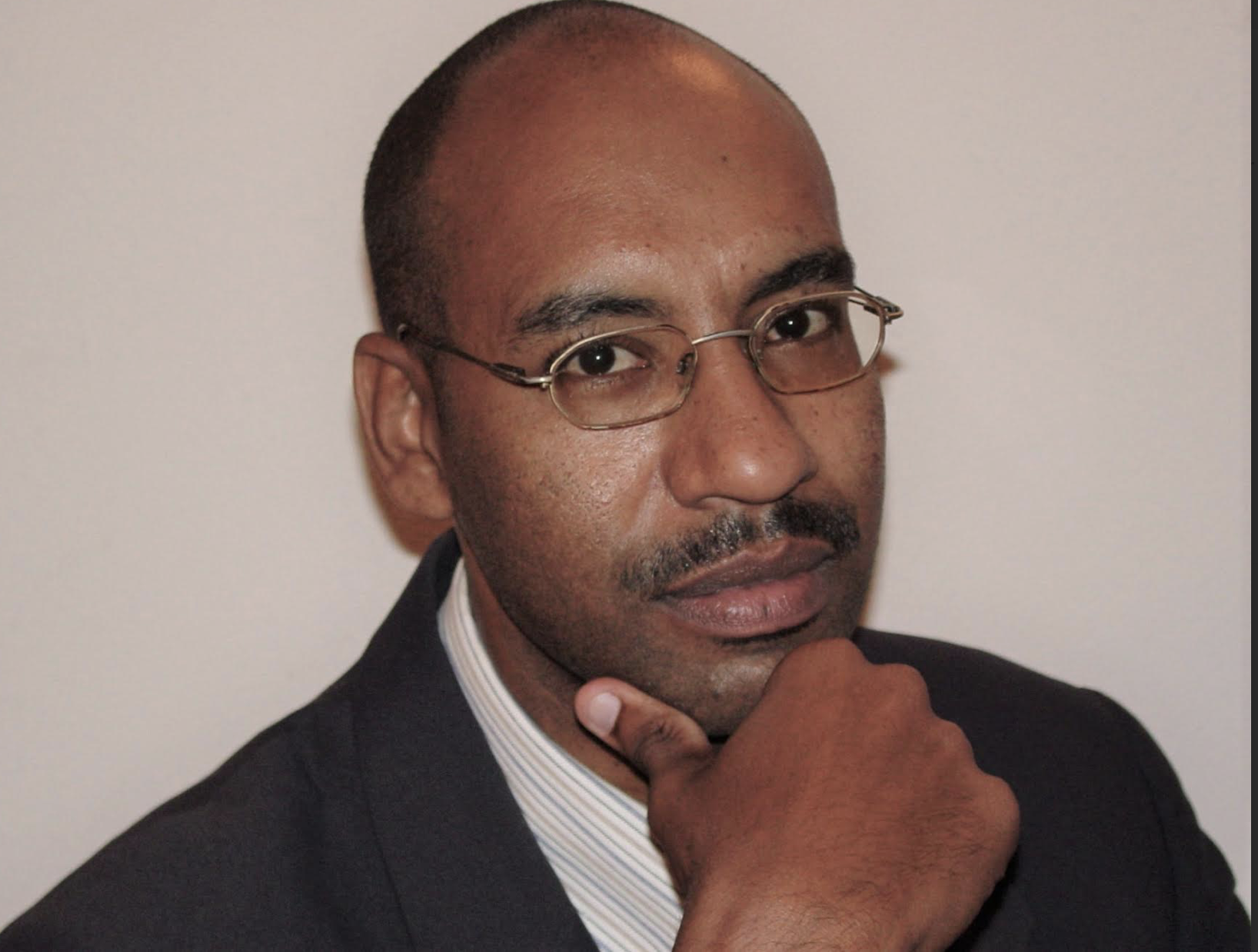
AFC Leader Attorney at Law Raphael Trotman

The anticipated election in Trinidad and Tobago is now history and Patrick Manning’s People’s National Movement (PNM) has been retired to the opposition benches. Former Prime Minister Patrick Manning in a fit of dementia decided to go back to the electorate almost two and a half years before the election was constitutionally due. He must of thought the T&T electorate was of his own state of mind. Perhaps Manning like Erskine Lloyd Sandiford before him believed it was better to sacrifice it all as a catalyst to usher in a rebirth of their respective parties.

Guyana’s election is the next which will be followed with heightened interest for more reasons than one. The election is constitutionally due in about twelve months. For those who have been following developments in recent years it could prove an important election for Guyana and by extension the Caribbean. The Indo-flavoured government of Bharat Jagdeo has been at the end of a flood of corruption and racially motivated charges in recent months. If one can judge from the level of emigration flows to the smaller and less resource rich neighbouring islands, conclusions can be drawn that the incumbent government has not been creating enough opportunities to reasonably satisfy its domestic market.

Regional Pollster Peter Wickham of CADRES has whetted the appetite of the pundits by issuing a Press Release (credit to Peter Wickham – summary of a March 2010 survey) which makes for interesting reading. One year out it looks like Mr. Raphael Trotman’s Alliance For Change (AFC) is a third party which cannot be ignored. Of interest to many is the support of the incumbent PPP/Civic, still leading the pack and this is despite a barrage of accusations alleging corruption in government.


Discover more from Barbados Underground

Subscribe to get the latest posts sent to your email.

18 responses to “CADRES Survey Findings, Alliance For Change (AFC) May Hold Balance Of Power In Guyana Election”


  1. Despite all the talk and commentary about the Jagdeo government’s alleged connection to the crime underworld and corruption here it is the PPP is still leading the pack albeit its popularity is waning.


  2. I look forward to reading the two other installments of CADRES opinions of the poll.

    Party Support:
    Afro Guyanese have demonstrated maturity in not blindly supporting a party that although is majority Afro centric, they think do not have their best interest at heart

    Middle age Indo-Guyanese are still demonstrating party support base on ethnicity. Largest voting bloc for the PPP/CIVIC

    There is hope with the younger generation of both races as they see new hope in coming together with support for a mixed race party.

    I still see concerns for Barbados with immigration from Guyana.


  3. @Adrian

    Peter has promised to keep the BU family in the loop.

    It will be interesting to observe how Starcom network covers elections in Guyana. It was all over the Trinidad election but then again the parent is based in Trinidad.


  4. Up to now we here in Guyana are yet to learn who it was that commissioned this “POLL”. However all leads point to the AFC themselves as they are no stranger to these FAKE polls. Back in 2006 they hired DICK and got COCKED!
    Dick Morris had predicted back then that the AFC would hold the balance of power after 2006 elections………………The result was that they got 5 seats.


  5. This is just another attempt to sway public opinion in favour of the AFC………a rather poor one albeit


  6. Anonymity has no credibility the world over.The opposition forces has resorted to using pseudonyms that make them look like PPP supporters speaking out against the government,anonymous poll commissioner(s)to spread rumors and a whole lot of childish tricks.This type of strategy is proof of the opposition’s incompetence and lack of real substance.


  7. @Ryno I fully agree with you there


  8. @The Truth

    In this case you are fingering CADRES a polling organization which has established a solid reputation across the region.


  9. @David

    CADRES doesn’t have as solid a reputation WORLDWIDE as DICK MORRIS, yet his prediction in 2006 was proven to be WAY OFF BASE or just a poor attempt at swaying votes in favour of the AFC without being fully cognizant of the GUYANA REALITY!


  10. @The Truth

    We can be pedantic about who has the greater reputations.

  11. Amazed by it all Avatar
    Amazed by it all

    Its amazing that all that we have gone through with Peter Wickham and CADRES, people are still trying to cast aspersions on their reputation and professional integrity. Unfortunate.


  12. nothing unfortunate about it. that’s life. who is peter wickham that his work can’t be challenged. especially when he is his own worst enemy and doesn’t even realise it.

  13. mash up & buy back Avatar
    mash up & buy back

    Read Freddie Kisoon’s article in todays Kaeitur newspaper of Guyana.

    Imagine because he is critical of the Jagdeo administration,they got one of their supporters to throw a bowl of faeces in Kisson’s face last month.

    Yet not a word from fellow guyanese journalist who is safely residing in the lap of comfort here in sweet barbayduss while he cusses us out left and right.

    Remember ricky singh pretends to be the the most strident voice in the region for journalist freedom,except of course if that freedom is infringed under his buddy basdeo jagdeo.


  14. Peter you need to be careful when you travel to Guyana boy based on what Kissoon is saying. Our friend Randy Persaud seems to throwing his weight around. BU had a run-in with the gentleman a while back.   

    The Bajan PM hinted that Ramphal and Singh were ungrateful

    June 10, 2010 | By KNews | Filed Under Features / Columnists, Freddie Kissoon

    Let me say before this the essential points of this essay unfolds as a citizen and media worker of the Caribbean region, I have absolutely no regard and no respect for Guyana-born Barbadian resident, Rickey Singh.

    It is my right to assert how I feel about another human being though my feeling should exclude vile descriptions, libelous adjectives and personal attacks. I will avoid such derogations now and in the future.

    As we are on the subject of Barbados, I wish to extend my condolences to the family of Guyana’s Honorary Consul in that Caricom state, Norman Faria. Not much has been written about Faria since his death. I had little reason to regard him with civility because he published nasty attacks on me using the pen name John Reid. John Reid was the author of the pro-communist book, “Ten Days that shook the World,” about the 1918 Russian Revolution.

    Faria was a communist in the league of Cheddi Jagan. This is not the time to assess the politics of Faria but his contradictions are quite common among today’s Caribbean communists. Faria adored the PPP and was a fanatical supporter of the Jagdeo and Castro presidencies. But he chose not to live or work in Guyana and Cuba for even a week. He loved capitalist Barbados.

    By this time I would have hoped that the Barbadian Government would have expelled all those Guyanese that are illegal residents. There is no moral way you can justify an influx of illegal entrants from a large territory like Guyana into a tiny microstate like Barbados consisting of a mere 166 square miles.

    These Guyanese should leave the people’s country and come home and vote for change, vote for new leaders that would make their country as stable as Barbados

    Last year, when Prime Minister Thompson demanded that illegal residents in Barbados leave or face deportation, Sir Shridath Ramphal and Rickey Singh were among those who voiced indignation. One wonders why they would be angry at the deportation of Guyanese from Barbados who were not legally processed.

    In retaliation, Prime Minister Thompson subtly remarked that both Ramphal and Singh were ungrateful because Barbados has been kind to them. Two years ago, Ramphal retired from active international life and bought a permanent house in Barbados.

    Singh, of course, ran away from the PNC Government and was granted residency in the island. Here is a man who can find time to comment on the policies of the Bajan PM yet is a sordid apologist for fascism in Guyana. One can just imagine how PM Thompson feels about Singh and his double standards.

    I am amazed that Singh does not come under more criticism from Bajan human rights groups.

    Where are the voices of Ramphal and Singh on two frightening episodes in Guyana? First, it was unthinkable in modern politics anywhere in the world to hear a country’s Attorney General tell his nation that when he heard the public talking about a Minister’s illegal escapades he thought it was he being spoken about because he is given to such behaviour. This is what Senior Counsel Charles Ramson told the people of this land.

    We do not have the kind of political decency in the halls of government that would have allowed for the ostracization of Ramson. But isn’t this an egregious statement in the Caricom region far worse than Thompson’s eviction notice?

    Secondly, we have an advisor to President Jagdeo who has done something terrible that should bring immediate response from both Singh and Ramphal. Dr. Randy Persaud, contemptuous and cynical about the CSME in Caricom, has exclaimed that a Barbadian journalist and political analyst, Peter Wickham, has interfered in the internal affairs when his organization conducted a poll here in Guyana about people’s voting attitudes.

    Here are his exact words, “CADRES (Wickham’s polling outfit) is interfering in the internal affairs of Guyana,” (SN, June 8, page 6). This came from the pen of a man who is a senior official of a Caricom Government. It is a most disgusting remark and should be condemned by the citizens of Caricom who each carry a common Caricom passport.

    Like Ramson, Persaud is not going to be disciplined because of the poor quality of leadership we have in the corridors of power, but it is obligatory of Ramphal and Singh to demand that Jagdeo show some measure of political morality and apologize to the Caribbean people.

    I doubt these two Bajan residents will do it. Sometimes I feel that the Barbadian Government should ask Ramphal to buy a house in his own country and send Singh packing.


  15. David and BU family, the truth, Joe Public and Ryno are PPP sycophants who are paid to propagandize on Caribbean blogs. In fact Joe Public uses the same name on other blogs. These are racist Indians who will cause problems in any society where black people are, because of their culture. Take a gander at this:

    Recent attacks against Indians in Australia brought cries of racism from the media in India. Now writers have shifted their focus, examining India’s own struggles with racism.
    India’s Inherent Racism

    In Australia this May, a savage attack and robbery left two Indian students hospitalized, leading to protests in Melbourne’s streets. The assault closely followed the firebombing of an Indian home and one other allegedly race-based incident. These incidents, though not clearly racially motivated, led to predictable outrage in Indian media. Now, the Indian media and blogosphere is turning on itself, questioning what it sees as India’s own rampant racism.

    Diepiriye Kuku, an African living in India, says “India is racist and happy about it.” Upon entering a bank one day Kuku was startled by a voice over the loudspeaker, droning, “An African has come.” It’s more than simple rudeness says Kuku. Landlords, bouncers at clubs, and visa processors have all rejected him because of his race. Kuku noted, “It is shocking that people wear liberalism as a sign of modernity, yet revert to ultraconservatism when actually faced with difference.”

    Soumya Bhattacharya, a guest writer for ESPN’s Cricinfo, cites another example. Last year, Indian cricket player, Harbhajan Singh was punished with a ban after calling Australian black all-rounder, Andrew Symonds a “monkey.” The ban was later retracted, and Bhattacharya’s friends didn’t understand “the fuss.”
    Bhattacharya explains that in India, racism is subtle, and so ubiquitous that it’s simply accepted. Blacks and other foreigners aren’t the only victims. As a child, the word relatives used to describe skin tones like Bhattacharya’s was “moila,” meaning “dirty.” He writes, “It was uttered unselfconsciously—if always with a bit of regret.”

    Bhattacharya also notes the popularity of skin whitening creams and the abundance of marriage advertisements whose range, Kuku also noted, includes fair, very fair, and very very fair. Bhattacharya argues that for a country of brown-skinned people to have such a powerful obsession with white skin demonstrates a degree of “unconscious self-loathing.” Yet, he strikes a hopeful note, adding, “unlearning our deeply entrenched notions of and responses to skin tone will take years, but being aware of things will be some sort of a start.”

    Historical Context: Race and status in India

    After President Barrack Obama was elected to office, news stations in India discussed Michelle Obama’s looks and whether “a real Afro-American” might influence beauty and fashion industries. Writing for the blog Chowk, Gajendra Singh surmised that India’s long-standing preference for fair skin, especially among higher castes, would resist change.

    According to legend, Hindu castes originated from of a “primordial being” out of whose body each social group, or varna, was born. Brahmins, priests and educators, left from the mouth, and Kshatriyas, warriors and kings grew from the arms. The Vaisyas, merchants, and the Sudras or laborers, respectively, grew from the thighs and feet, reports the National Geographic. The Untouchables, or Dalit, are considered so depraved that they weren’t associated with the body at all.

    Each caste was given a color, perhaps to signify skin color, says Dr. Kelley L. Ross, a professor at the college of Los Angeles Valley College. He adds, “There is an expectation in India that higher caste people will have lighter skin.” Ross confirms this expectation, with the exception of Brahmins living in the south. This happens as a result of wars long past, where light-skinned Aryans invaded and inter-married with families in northern India.

    Centuries later, according to the Web site South Asian History, under British rule, elite Indians were taught contempt for their own culture. The article explains, “Britain needed a class of intellectuals meek and docile in their attitude towards the British, but full of hatred towards their fellow citizens.” Singh added that, after gaining its independence from Britain, India’s bias toward a light skinned ruling class remained, and the reigning class comprised mainly of Kashmiri Brahmins.

    Today, many entertainers in India have endorsed skin color bias by advertising skin bleaching creams. However, in January, Bollywood star Aishwaria Rai Bachchan made headlines by rejecting an offer from a skincare company. An unnamed source said, “She will never promote a product that discriminates on the basis of one’s skin colour. Ours is a society where biases are so prevalent that she will do all she can to curb it,” iTimes reported.

    Opinion & Analysis: Is the caste system racist?

    In 2003, University of Pittsburgh professor Larry Glasco compared blacks in America to the Dalits in India: “Blacks formerly dominated among garbage haulers, Dalits today clean the nation’s latrines. Dalits live in segregated settlements in the countryside and, like America’s blacks, in ghettoes in the cities.”
    In April 2009, the Human Rights Watch blog criticized the UN Racism Conference for its failure to address the caste system. Clive Baldwin, senior legal advisor at Human Rights Watch, said, “Caste discrimination is a major global human rights issue that needs to be effectively dealt with at the international level.” According to the HRW, Dalits have been beaten, threatened, and otherwise prevented from voting.

    Related Topic: Light skin vs. dark skin racism in America

    In August 2000, a study by the Department of Psychology at San Diego State surveyed 300 blacks to explore whether racism was enhanced by the darkness of their complexions. Researchers concluded, “[D]ark-skinned Blacks were 11 times more likely to experience frequent racial discrimination than their light-skinned counterparts.” The report stated that 67 percent of the dark-skinned Blacks were discriminated against compared with 8.5 percent of light-skinned subjects, according to PubMed.

    In 2003, Dwight Burch, who worked at an Applebee’s restaurant in Atlanta, agreed to a settlement of $40,000 after filing a discrimination claim. Burch alleged that he was fired after telling his manager, who was also black, he planned to report him to headquarters for insulting his dark skin color. In a press release, Burch said racism can happen within one’s own race. He added, “that person should know better, especially if he is a manager.”

  16. mash up & buy back Avatar
    mash up & buy back

    Ruel Daniels

    Thank you very much for this enlightening piece of information.

    What is the name of the blog site you were quoting from?

    Have you heard Ruel,norman faria aka ’emancipation day message’,or Reddy, gone,no longer here to torment black guyanese?


  17. @M&BB. Actually it was sent to me sometime back by an African American colleague who could never understand how a dark skinned Indian Guyanese could nurture racial prejudice against a lighter skinned African Guyanese. I suggested he do a bit of digging on India’s origins, religious and cultural beliefs, practises and establishment. Upon examining the caste system his eyes became opened because he saw something that was very familiar from the stories he heard from his parents and older relatives about the Jim Crowe System in the US. That is why it is so important to take away the shield of ignorance that protects Indian Guyanese racists, and allow them to fool African Americans that they are different than whites who are racists.

    David Duke proclaimed that he never understand the difference in races until he visted India and saw the order that stratified people based on skin color and religious beliefs about who was born from which portion of the God’s body. Indians brought those beliefs to the Caribbean when they came. On encountering Africans, even those who were of a darker hue made the inverse proportional ransition into Brahmin status, so Africans became what they were before they left, while they moved up in a manner of speaking.

    They are many who challenged the work of Doctor Keane Gibson with the contention that Caribbean Indians emanated from the under class, the backward castes in Southern India, and thus could not be linked with the prejudices of the upper class. That is just so much horse radish. It is these same backward casts that call black cricketers monkeys in cricket stands in India. A quite remarkable insult when one considers that one of their sacred and cherished Gods is in fact a Monkey. With this example of illogicalism, one should not be surprised by anything.


  18. @Ruel or Peter

    Do you believe a strategy of the PNC could be to go into the next election with an Indian at the helm i.e.replace Corbin with an Indian? It is a strategy which Kamla in Trinidad seemed to have used with some good effect.

The blogmaster invites you to join the discussion.

Trending

Discover more from Barbados Underground

Subscribe now to keep reading and get access to the full archive.

Continue reading