← Back

Your message to the BLOGMASTER was sent

Submitted by Georgie Porgie
Dawn Phenomenon and Somogyi Effect

One of the most frustrating things that diabetics deal with is an unexpected rise in blood glucose overnight. You go to bed with a BG of 100 mg/dL (5.6 mmol/L), and wake up with a BG of 130 (7.2)! You didn’t eat, so what happened?
This results from two distinctly different processes: Dawn Phenomenon and Somogyi Effect. Here are some basics.

DAWN PHENOMENON
While it has rather an attractive name the Dawn Phenomenon can cause problems for diabetic’s. The Dawn Phenomenon occurs when there is an apparently unexplained morning rise in the fasting blood sugar (blood glucose) levels. That is when the fasting (pre-breakfast) level in the morning is higher than the pre bed-time level.

When fasting blood sugar levels in the morning are much higher than the pre-bedtime reading, with no food eaten in between there is obviously a problem somewhere.

Increased morning blood sugar levels can have two causes –

  1. The Liver dumps its reserve of glycogen (a form of glucose) when blood sugar levels get too low.
  2. Insufficient Insulin in the blood together with increased Insulin Resistance due to hormones released in the early morning.
    Everyone, diabetic or not, exhibits some Dawn Phenomenon. It is a natural part of our bodies’ circadian rhythms

The hormonal changes are basically preparing the body for the expected exertions of the morning and occur in everyone, both diabetic and non-diabetic. In diabetics though they can raise blood sugar levels too high and cause further difficulties at breakfast time.

Since most of us fast while sleeping, our bodies use stored energy during sleep. The body uses all three macro-nutrients (carbohydrates, proteins, and fats) to store energy.

The most easily used is the storage medium of carbohydrates, called glycogen. Glycogen is made from glucose, and is stored in the liver and muscles.  Since it is basically nothing more than a complex matrix of glucose, it is easy for the body to store and use, something the body does all day long. The technical term for the act of creating and storing glycogen is glycogenesis. When the body calls for the conversion of glycogen back to glucose it is called glycogenolysis.

Another macro-nutrient that is available to be converted to glucose is protein. Most of us think of our protein as being stored in muscle, but the body has protective mechanisms to make muscle wasting its last choice. One of the most useful and readily available sources of protein storage is in blood components, i.e., albumin (plasma).

The body uses a process performed in the liver to convert amino acids, the building blocks of proteins, into glucose. The name for this process is gluconeogenesis, literally “the creation of new glucose”.

So, what does all this have to do with a high fasting BG? Overnight, usually between 4am and 11am, your body releases some hormones. These are Growth Hormone (GH) from the anterior pituitary gland, cortisol from the adrenal cortex, glucagon from your pancreatic alpha-cells, and epinephrine (adrenalin). These hormones cause an increase in insulin resistance, raising your BG.

In addition, these hormones trigger glycogenolysis and gluconeogenesis, adding stored or new glucose to your bloodstream. Dawn Phenomenon, and its associated increase in insulin resistance, is the reason most diabetics are far more sensitive to carbs in the morning.

How to Prevent or Lessen the Effect of the Dawn Phenomenon

Since the two causes of the Dawn Phenomenon have two different solutions we need to find out which is occurring first. Check blood sugar (glucose) levels at 2-3am, if they are regularly very low followed by a higher bounce in the morning fasting level, its likely to be a liver dump.

Otherwise if the blood sugar levels are more or less the same as it bed-time followed by a rise in the morning fasting level its likely to be insufficient insulin that may be combined with early morning insulin resistance.

Liver Dumps

Liver dumps cause a sudden release of glucose in the blood leading to a quick increase in blood sugar levels. They may happen after a blood sugar low or hypo that may wake you in the early morning. A small snack last thing at night can help; a mix of carbohydrate, fibre, protein & fat to slow the release of blood sugar. Something like Cheese on Toast, Peanut Butter on Ryvita and so on.

Insufficient Insulin

For diabetics injecting insulin a common cause of high fasting blood sugar levels in the morning, can be if the insulin runs low during the night. That combined with a lessened effect of any remaining insulin due to hormonal changes that occur in the early morning. The remaining insulin is insufficient to cover the background needs of the body even at sleep. So after about 4am, blood sugar levels gradually rise. For Type 2’s on drugs this is likely to be a lesser effect because their pancreas still has some remaining insulin production.

Morning Insulin Resistance
Insulin Resistance may remain high for many hours including before and after breakfast. Carbohydrates eaten in the morning may cause a greater increase in blood sugar levels than carbohydrates eaten at mid-day or evening. It might be expedient to experiment with the following suggestions to see what works for you.

  1. Try eating no food after dinner. This works for people whose Dawn Phenomenon isn’t very strong. Basically, it lowers their baseline BG, so that when DP does hit them, the increase keeps them below a certain level, usually 120 (6.7).
  2. Try eating a small snack of fat and protein before bed. Most find that a tablespoon of peanut butter, or some cheese and deli meat are effective. The theory here is that the slow-digesting fat and protein holds their BG high enough overnight to avoid Somogyi Effect (see below).
  3. Eventually, you will learn how the two disparate approaches above work for you. Hopefully, you will set personal targets to guide you, eg., if my BG is below XXX (insert your target here), I need a snack. If my BG is over XXX, I don’t need a snack.
  4. Lastly, the prescription medication Metformin HCl (Glucophage) is often very effective in limiting Dawn Phenomenon for Type-2s and insulin resistant Type-1s. Of course, Type-1s can adjust their basal (slow) insulin regimen to account for Dawn Phenomenon.
  5. Lastly, EAT BREAKFAST. The resulting increase in blood glucose from food will often turn off the continued rise. If you don’t, some diabetics will continue to rise until 10-11 am.

SOMOGYI EFFECT (or the “rebound” effect)

Somogyi Effect, named for the researcher who first described it, is the tendency of the body to react to extremely low blood sugar (hypoglycemia) by overcompensating, resulting in high blood sugar. This is secondary to a low blood sugar overnight, while fasting overnight. It is most commonly seen with insulin using diabetics, but is also seen with overnight reactive hypoglycemics.

The Somogyi effect is most likely to occur following an episode of untreated nighttime hypoglycemia, resulting in high blood sugar levels in the morning. When the blood glucose levels drop too a low overnight, the body responds by releasing counterregulatory hormones such as glucagon and epinephrine. These hormones (especially glucagon, the strongest blood glucose increasing hormone)  spur the liver to convert its stores of glycogen into glucose, raising blood glucose levels.

This can cause a period of high blood sugar  following an episode of hypoglycemia, the result of which is that the liver is stimulated  to start glycogenolysis and gluconeogenesis to provide enough glucose for the  body to survive. This is sometimes referred to as a Liver Dump. Often, this mechanism over-produces, and the diabetic wakes with a significantly higher BG.

People who wake up with high blood sugar may need to test their blood glucose levels in the middle of the night (for example, around 3 AM).  If their blood sugar level is falling or low at that time, they should speak with their health-care team about increasing their food intake or lowering their insulin dose in the evening.

The only way to prevent the Somogyi effect is to avoid developing hypoglycemia in the first place. Setting the patient’s BG target a bit higher, will usually prevent them from having a hypoglycemic event overnight.

DAWN PHENOMENON-SUMMARY

  • The Dawn Phenomenon refers to a  sudden rise in blood glucose levels in the early morning hours.
  • This condition sometimes occurs in people with insulin-dependent diabetes and (rarely) in people with noninsulin-dependent diabetes.
  • Unlike the Somogyi effect, it is not a result of an insulin reaction.
  • People who have high levels of blood glucose in the mornings before eating may need to monitor their blood glucose during the night.
  • If blood glucose levels are rising, adjustments in evening snacks or insulin dosages may be recommended.

THE SOMOGYI EFFECT (Rebound hyperglycaemia) –SUMMARY

This refers to a swing to a high level of glucose (sugar) in the blood from an extremely low level, usually occurring after an unrecognised and therefore an untreated insulin reaction and hypoglycaemic attack during sleep in the early hours of the morning or during the night. It presents as hyperglycaemia before breakfast.

The swing is caused by the release of stress hormones to counter low glucose levels, and is also due to the release of the insulin-opposing or counter-regulatory hormones in response to insulin-induced hypoglycaemia. People who experience high levels of blood glucose in the morning may need to test their blood glucose levels in the middle of the night. If blood glucose levels are falling or low, adjustments in evening snacks or insulin doses may be recommended.

It is essential to recognize the Somogyi effect in order to avoid the mistake of increasing (rather than reducing) the dose of insulin in this situation.


Discover more from Barbados Underground

Subscribe to get the latest posts sent to your email.

103 responses to “DIABETES: Dawn Phenomenon and Somogyi Effect”


  1. SO THEN YOU DO AGREE THAT IT IS ACCURATE?


  2. David

    Why don’t get this man off the blog because his useless information is taking up space where a more productive and informtive topic could have been advanced? This guy is obviously lost in the backwash of disillusionment and circumvents the circumference of the world of long time ago.

  3. Easy Squeeze (make no riot) Avatar
    Easy Squeeze (make no riot)

    It’s christmas soon baby jesus snow flakes little town of bethlehem and all that


  4. @Easy
    Christmas?…what Christmas…..wid NCC workers fucked u PROPER, and the majority of hard working people broke as ass…..what kinda Christmas is this one going to be dredd?


  5. Alternatives To Sugar – For Diabetics And Weight Watchers

    Posted on August 6, 2010 by David | 19 Comments |

    Submitted by Doc GP


  6. Fruit does have a place in a healthy diabetes diet. Find out about the best fruits to eat and why whole fruits are better than fruit juice.

    People with type 2 diabetes know that they need to limit the amount of sugar that they eat — even natural sugars. So how important is fruit for diabetes? Contrary to what you may have heard, it’s actually a crucial part of a good diabetes diet, according to a 2013 study published in theBritish Medical Journal that followed nearly 190,000 people over a number of years to see who would develop type 2 diabetes or not.
    The study, which looked at the association between diabetes and eating fruit, found that eating whole fruits, especially blueberries, grapes, and apples, significantly reduces the risk for type 2 diabetes. On the flip side, drinking more fruit juices actually increases the risk for diabetes.
    “If you have type 2 diabetes, you do need to watch your sugar “Both whole fruit and fruit juice have sugar, but a fruit is only equal to about 4 ounces of fruit juice. If you drink 12 ounces of fruit juice, you could be getting too much sugar,”. “And whole fruits have a lot of other advantages for a diabetes diet.”
    Understanding the Sugar in Fruit
    Having type 2 diabetes means having to count your carbohydrates (carbs). Like vegetables and grains, fruits are carbs, and you need them. If you have diabetes, figuring out the best fruits for diabetes is about more than counting carbs. “Whole fruits are an excellent source of antioxidants,” Barbera says. “They have a lot of fiber, so they make you feel fuller and satisfy your hunger. They also add a lot of flavor to a diabetes diet.”
    Antioxidants are important because they help prevent cell damage. “Antioxidants in a diabetes diet may help reduce inflammation caused by oxidative stress,” Barbera says. Oxidative stress may contribute to complications of diabetes. “To get the most antioxidants, look for fruits with a variety of bright colors and full flavors,” she says.
    A 2013 study published in the National Journal of Integrated Research in Medicine compared people with type 2 diabetes who were on an oral diabetes medication alone to those on medication along with antioxidant supplements. After three months, people taking medication and antioxidants had less oxidative stress than the other group.
    Unlike fruit juice, a whole fruit still has all of its fiber. That’s important for a diabetes diet because fiber isn’t digestible — it fills you up without raising your blood sugar. Including more fiber in your diet means better blood sugar control. To get the most fiber, eat your fruit with the skin or peel on it.
    Counting Fruit Carbs and Other Diabetes Tips
    “Most people with diabetes should get about 45 grams of carbs per meal,” Barbera says, adding that it’s important to balance fruit with proteins and other sources of healthy carbohydrates. “The key is to count the carbs and spread them out through the day to keep your blood sugar under control.” Your doctor and the feedback you get from monitoring your blood sugar can help you learn how.
    A small piece of whole fruit has about 15 grams of carbohydrate. So does one-third cup of fruit juice or one-half cup of canned or frozen fruit (as long as there’s no sugar added). Dried fruit is another good source of fiber and antioxidants, but it can have 15 grams of carbohydrate in just 2 tablespoons, so measure your portions carefully.
    If you want to drink fruit juice, drink only 100 percent fruit juice without any added sugar. Also, try to limit your fruit juice to half a cup per serving. You might consider substituting a tasty vegetable juice that will allow you to drink a whole cup with only 10 grams of carbohydrates.
    Best Fruits to Eat for Diabetes
    Consider these high-antioxidant fruit choices as the best fruits to eat for a healthy diabetes diet:
    • Grapes
    • Apples
    • Berries
    • Citrus fruits
    • Pineapple
    • Mango
    • Papaya
    • Cantaloupe
    • Apricots
    Colorful, flavorful fruits in all varieties have a healthy place in your diabetes diet. Just remember to COUNT your carbs and eat fruit in moderation. Choose whole fruits instead of fruit juices because they’re better for you, taste great, and fill you up faster and longer with fewer total carbs.


  7. @Easy

    It is going to be a humbling experience brother man. But you ought not underestimate the Resilience of the human Spirit papa.


  8. A big part of the problem is that fruits are expensive in Barbados and the availability on the wayside of local fruit trees as in days of yore is now a pipe dream with lifestyle change geared towards shopping in the supermarket for everything.


  9. yes david——it is called progress

    re the availability on the wayside of local fruit trees as in days of yore is now a pipe dream
    CAN FOLK STILL BUY FRUIT TREES CHEAPLY AT HAGGATTS AFTER JUNE IST?


  10. @Dr. GP.
    Strawberries and blackberries two cups per serving. Blueberries and raspberries one cup per serving. Pineapple 3/4 cup and melon (cantaloupe, canary, casaba, santa claus) one cup per serving. Aslo red and black currants. Less sugar. Only 15 average size grapes or cherries per serving, or 8 of those large globe grapes, so it is best to cut grapes and cherries out completely. Only half a medium mango, preferably the hairy (fibrous ones). One medium orange and/or one medium banana per day. I never drink fruit juice. One can also have one large peach or two kiwis, or two plums, per serving.

    With the variety of fruits in the markets you can have your 3 servings without repeating the same fruit for several days.


  11. Dwarf fruit trees can be purchased from NCC at the Stadium Road location. Colonel maybe able to address the other locations.


  12. THANKS PAT & DAVID


  13. PAT
    HAVE YOU HAD ANY EXPERIENCE WITH THE DAWN PHENOMENON OR KNOW OF ANYONE WHO HAS

    HAD SOME ELDERLY FOLK WHO WOULD COME TO CLINIC VERY WORRIED AND CONFUSED


  14. @Dr. GP

    I have had it. the nurse said I was not having enough carbs before bedtime, So If I go to bed early, when I get up for the bathroom, I slip downstairs and have something. It works.


  15. To Dr. GP

    Also in the morning at the gym, sometimes I would get lilght headed, so I had to increase the breakfast carbs as well.


  16. nOW YOU UNDERSTAND WHY–GLYCOGEN DUMPING DUE TO GLYCOGENOLYSIS TRIGGERED BY THE COUNTER REGULATORY HORMONES


  17. Yep. So along with my orange I now have to eat 3 slices of whole grain bread for 60 grams of carbs. I was taking 45 before.


  18. Way back in 91 when I used to go do manual work building on Saturdays I used to take 6 oranges cut into four quarters

    DIABETICS NEED TO BE AWARE THAT STRESS CAUSES RELEASE OF GLUCOSE INTO THE BLOOD STREAM

    PERHAPS WE CAN ILLUSTRATE THAT LATER


  19. @ DOMPEY

    Go away.

    I am not diabetic, but however find the information provided extremely informative and useful,

    At least GP is providing vital info, all I have seen from your posts are a bunch of backward nonsense.

    You are behaving like a child who is suffering from attention deficit dis-order..

    Grow-up. if you have nothing positive to add JUST SHUT UP.


  20. [caption id="" align="alignnone" width="497"]dka Click image to view PDF – Dr. GP[/caption]


  21. Anthony

    I am not trying to be a detraction here, but good Jessus brother, this information is common knowledge. And I cannot believe that the average Barbadian wouldn’t be conscientous of this informtion given epidemic of Diabetes in Barbados. And like you thank God, I do not have diabetes but that is not to say that it isn’t evident on the maternal and paternal sides of my family. So therefore, as a health conscious individual, I made it my business to find out as much about the disease as I could. And alone as there is the library, the internet and the doctor’s, why would I rely on a man for such information who I know little of? Now, I just hope that you’re a thinking person and that you’re cognizant enough to corroborate as well as substantiate the informatio others are feeding on the internet? I need not caution you because you ought to know at your age that you do accept the judgment of others at face value, you have to test it before you give of your trust and confidence brother.


  22. Ignorance surely knows no bounds.


  23. Anthony,

    Anthony, here is the bottomline: so long as there is the Library, Internet and Doctors to ascertain the relavant information regarding diabetes. I see no need whatsoever to rely on persons such as GP to provide me information that I am quite capable of researching for myself and this is the attitude you ought to carry. As a youngster I spent countless hours in the reference department of library in down Bridgetown, reading every and anything I got my hands on because I was determined to educated my mind so that I would not have to rely on others for knowledge. Now, all in all, any intelligent person would desire to take initiative to ascertain the correct kind of information regarding his or her medical necessities rather than trust in some internet doctor.


  24. @ Dompey

    I do not need a lecture from you.

    I have a couple of Bachelors and a Masters from an overseas highly accredited University so I very am capable of conducting my own research and forming conclusions.

    However I appreciate anyone efforts to share knowledge with others in a positive manner.

    You need to spend more time learning than spewing.


  25. David | November 24, 2014 at 8:39 PM |
    didnt you get a ppt presentation?


  26. David

    You continually regard my comment as nonsense, but I cognizant of the fact that you do not know better. Listen, I am speaking my friend, from an international perspective and I am telling you that I wouldn’t ever put full confidence in my the judgment of my personal physician without first seeking a second opinion, if I am diagnosed with a life threatening illness; for less more the judgment of some reclusive eccentric who conceals himself behind the cunterputa monitor spew his common knowledge.


  27. I have sent it again with another of my ppts on this very important issue
    Most folk who are admitted to hospital has reached this stage
    I am sure that there are folk on BU who can slowly sift through these ppts understand it and use it to warn /help folk around them.


  28. @David the blogmaster, what do you think of “F1 in Schools” I posted in Sports Corner?

  29. Easy Squeeze (make no riot) Avatar
    Easy Squeeze (make no riot)

    Marijuana Decreases Insulin Resistance, Improves Blood Sugar Control


  30. Where Do We Go From Here ?


  31. Anthony/ David

    Doctors make mistakes to; that is why their have what it know Malpractice- Insurance.
    when I worked in the emergency room of major a hospital Here, I saw a doctor gave a pregnant woman a prescription that could have endangered her fetus. And then the incompetent fellow ask the nurse to go to the parking lot to retrieved it. And you’re asking me to rely on the judgment of a person I haven’t a clue regarding? Perhaps, I am a little ignorant but I am surely not stupid.


  32. Pardon the above mistakes…… David the French philospher Rousseau, implore us to be ignorant a little because in so doing we would never deceive ourselves.

    Later unu


  33. Some of us have diabetics who are alcoholics. Thats bad!
    Most alcoholics get their calories from alcohol which is metabolised to acetyl CoA.
    In the absence of carbs there is no oxaloacetate to run the Krebs cycle. Consequently, the acetylCoA levels rise and ketone bodies are made in excess.

    When the ppts are uploaded one can see the result of increased ketone bodies in diabetes.


  34. [caption id="" align="alignnone" width="498"]Keystones Click to view presentation – Dr. GP[/caption]


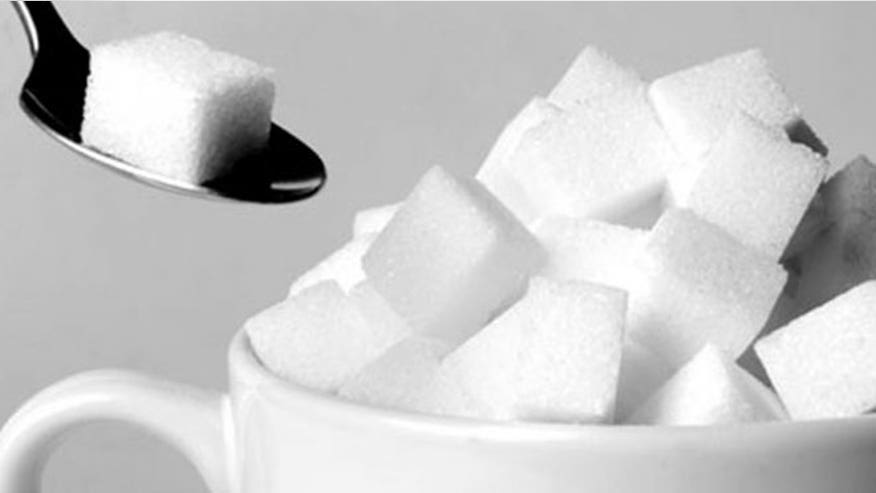
  35. Man eats sugar-heavy diet for 60 days, receives shocking diagnosis

    Published November 19, 2014

    660_sugar_cubes.jpg

    Following in the footsteps of Morgan Spurlock, who ate only McDonald’s food for one month in the film Super Size Me, an Australian man has undergone a sugar-heavy diet for 60 days to explore the ingredient’s impact on his health.

    In the upcoming That Sugar Film, Damon Gameau, a filmmaker and TV actor, vows to follow a strict diet of “healthy,” low-fat food with high sugar content, News.com.au reported.

    Within three weeks, the formerly healthy Gameau became moody and sluggish. A doctor gave him the shocking diagnosis: He was beginning to develop fatty liver disease. According to the Mayo Clinic, the most severe outcome for fatty liver disease is liver failure – http://www.foxnews.com/health/2014/11/19/man-eats-sugar-heavy-diet-for-60-days-receives-shocking-diagnosis/

    And the video:


  36. If you take a diet with high sugar content, you will produce very high levels of acetylCoA. One major consequence of this is the production of fattyacids which are then deposited in the liver=> FATTY LIVER

    With the liver cells filled with fat they are unable to function normally.


  37. Condolences to the Miller family. Tim was a friend from my youth.

    http://www.barbadostoday.bb/2014/11/25/ready-to-fight/


  38. What bothers me is that everyone brings it down to our lifestyle and make all diabetics feel that they are a burden to society. Five or so million, John Boyce claims is spent on diabetic health care in Barbados alone. The PM also made some disparaging remarks and I am told that he too is diabetic. Then I look at the current Cabinet members since 2008 and how they have all subsequently ballooned and wonder how many of them fall into this “bad lifestyle” category. Half of them don’t really exude a healthy look anyway. I wish they would stop making us feel that we are the scourge of society. When the prostate problems escalates, who or what are we going to blame.


  39. @Miranda

    When the dust settles on the discussion it is mainly a lifestyle issue.

    On Tuesday, 25 November 2014, Barbados Underground wrote:

    >


  40. Not all diabetes is lifestyle induced. Certainly type I is not lifestyle induced.
    BUT THE MANAGEMENT IS RELIANT ON LIFESTYLE CHANGES AS WELL AS PREVENTION OF TYPE ii


  41. @ GP

    Hi Doc. I saw your ppt on prostate checks on the “Sick Health Care Blog”. To go off thread a bit I saw an article in Barbados Today Nov,24. telling us about 4 local doctors who advise against prostate checks if not really necessary. What’s your view on that opinion?


  42. These doctors were agreeing with the position we made here on BU.

    That is you can not rely on the PSA to either rule out or rule in the diagnosis for prostate cancer as the test is unreliable in this regard.

    The test is a screening test which is being abused. I think people are making some money on this.

    PSA plus rectal exam is a better deal.

    The acid phosphatase test though not a screening test is a better marker of cancer. This is raised when you have the disease and would be too late for screening.


  43. GP, thanks for making that clearer.


  44. One would think a country ‘full of diabetes’ would have been more interested in attending the lecture.

    image


  45. With over 50 per cent of men and nearly 70 per cent of women in Barbados said to be either obese or overweight.


  46. @Miranda November 25, 2014 at 3:06 PM “When the prostate problems escalates, who or what are we going to blame”

    “De wufless men”.


  47. @Georgie Porgie November 25, 2014 at 6:27 PM “That is you can not rely on the PSA to either rule out or rule in the diagnosis for prostate cancer…PSA plus rectal exam is a better deal”

    PSA+ rectal exam is a better deal
    PSA+ rectal exam is a better deal
    PSA+ rectal exam is a better deal
    PSA+ rectal exam is a better deal
    PSA+ rectal exam is a better deal
    PSA+ rectal exam is a better deal
    PSA+ rectal exam is a better deal
    PSA+ rectal exam is a better deal
    PSA+ rectal exam is a better deal
    PSA+ rectal exam is a better deal

    Tell the men to bend over and shut up. This won’t take a minute and it won’t hurt one bit.

The blogmaster invites you to join and add value to the discussion.

Trending

Discover more from Barbados Underground

Subscribe now to keep reading and get access to the full archive.

Continue reading