Banner promoting anonymous crime reporting with a phone and contact number 1 800 TIPS (8477), featuring the Crime Stoppers logo and a QR code for submitting tips.

โ† Back

Your message to the BLOGMASTER was sent

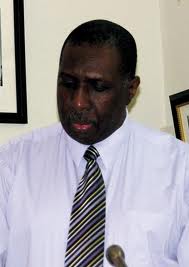
Hally Haynes, president of the Barbados cooperative Credit Union League
Hally Haynes, president of the Barbados Co-operative Credit Union League

The issue which has erupted about whether credit unions have been directed by theย  Financial Services Commission (FSC) to shift deposits held with non banks to commercial banks continues to gain momentum. The President of the Barbados Economic Society Ryan Straughn added his voice today. The unravelling saga has raised several issues which should concern Barbadians whether members of the credit unions or not.

The Barbados Co-operative and Credit Union League (BCCUL) is the umbrella body of credit unions in Barbados and should be the only entity making statements on the matter.ย  The matter which is playing out in the media makes it seem that it is a City of Bridgetown and Financial Services Commission affair.ย  Of concern to many is the statement issued by the BCCUL which was reported in the Barbados Today โ€œโ€ฆfurther, the Barbados Co-operative & Credit Union League Ltd., the apex body for credit unions and co-operatives in Barbados, totally rejects the notion of any ongoing row between the FSC and credit unions on this or any other issue. The pertinent facts surrounding the issue are as summarised belowโ€.

For anyone to suggest that the FSC has issued a directive to force credit unions to transfer all deposits held with non bank institutions to banks in order to force a take up of government treasuries is speculative at this stage. BU is willing to be proved wrong. Further, BU has had a look at the Co-operative Societies Act Section 34A and the law supports the fact that credit unions must be placed funds with banks or other credit unions regulated by the Act.

What it says to BU is that we should be also asking why under the old dispensation credit unions were allowed to contravene the Act. We have been critical of the Office of the Supervisor and its weak supervision of CLICO Insurance Ltd. Should we be similarly critical of the former Registrar of Cooperatives?

Here is what the Act states:

34A. (1) The funds of a society, including the reserve, may
(a) be deposited in
(i) a bank licensed under the Financial Institutions Act;
(ii) a society registered under this Act; or
(b) be invested in
(i) securities issued by the Government of Barbados;
(ii) securities, the payment of interest on which is guaranteed
by the Government of Barbados;
(iii) subject to subsection (2), securities issued in Barbados
by a company incorporated in Barbados and listed by the
Barbados Stock Exchange, if the company has paid a
dividend on its shares for the preceding 5 consecutive
years;
(iv) subject to subsection (2), securities issued in a member
state of the Caribbean Community by a company
incorporated in that member state and listed by the Stock
Exchange of a member state of the Community, if the
company has paid a dividend on its shares for the
preceding 5 consecutive years;

Co-operative Societies Act


Discover more from Barbados Underground

Subscribe to get the latest posts sent to your email.

106 responses to “Credit Unions Must Deposit With Banks According to the Law”


  1. This Democratic Labour Party Government will never get it right.
    They have the reverse Midas Touch
    The Idiots that voted for them in the last BUY ELECTIONS are just that–Idiots .

    When I heard Reggie Hunte attacking the Private sector the way he did yesterday, it confirmed to me why Barbados will never do well under the DLP. A similar thing happens in England where one party never gets it right with the economy.
    DLP is Bad for Barbados. They might be trying for all I know but really they aint cutting it———-

  2. Alvin Cummins Avatar

    @David.
    I have not yet read the act in its entirety, but right away I see a difference in interpretation of language being used. Your headline says that “Credit Unions Must deposit…However when I read section 34A of the act it says …”The funds of the society may…” There is a vast difference in law between “must” or “shall” (implying compulsion) and “May”; (the language of the act, implying a choice,), be deposited in a Bank, and then lists the other institutions where the money can be invested, and the conditions. As far as I know the act has not been repealed or changed, by Parliament,, so to accuse the government, even by implication, of forcing, or compelling, Creit Unions to do something different is just spreading false propaganda.
    If Credit unions in the past, strayed from the guidelines stated in the act and they are being brought back to do what they should have been doing all along, is no cause for alarm. The Government is ensuring that the people in charge of the funds of credit union members do what is right to protecct the members.
    Sorry Just Asking,, remember what happened to Midas? He was so avaricious that in his attempt to make everything turn to gold, it came to the point where he could not even eat for his food turned to gold and he perished. I differ from you because based on past history the DLP is good for the people it brings them to reality and makes the tough choices.


  3. Alvin………….i think people are more concerned about the timing, and as i stated sunday when the speculation started that laws, particularly as they relate to finance are susceptible to several different interpretations, why i told Hal i was not suggesting anything, i learned that in the banking system. Caswell, i am sure will have a take on it.


  4. Bank of Nova Scotia posted a second-quarter profit Tuesday of $1.6-billion

    The 3 Canadian banks in Barbados may be a good place to deposit Credit Union money.

    I don’t know much about banking and would like to hear from the BU banking experts.

  5. Alvin Cummins Avatar

    @Well Well
    People have a habit of being premature, especially in their anti government comments.. As far as I know the island has not been turned into a dictatorship. the way to change laws or Acts passed by a government is through the parliamentary process.So if it has not been passed through parliament why get on as if it has. Wait. I have not yet read of any comments by the opposition.


  6. Alvin……people have become very skeptical, both parties have a history of passing or changing laws and not telling the taxpayers anything, this is a lot of money at stake, any wrong moves and it can cause untold suffering.


  7. Why is Caswell’s credit union having a war of words with the regulator in the public? Why is the BCCUL saying through its president that the matter is under control?


  8. @Alvin

    You should always read in a context. Here is what Section 34A (3) states:

    “(3) Where the funds of a society are invested in a manner that is
    not in accordance with subsections (1) and (2), no action shall be taken
    against that society for a period of one year after the commencement
    of this Act.”


  9. At face value there is a case to be made that the FSC is enforcing the law.


  10. Barbados inflation has been bordering on 8% for years. The Banks are offering 2 – 2.5 on fixed deposits. The credit union members are guaranteed to become significantly poorer on an annual basis as a result of the spread.

    National insurance funds were not treated in the same way as they are taken from people by law and with the promise that not only will the funds be safe but they will produce a return that will better mitigate against inflation. National Insurance funds are sometimes exchanged for real money and placed in investment houses overseas or they may find there way into bricks and mortar, which unfortunately results in the Government being the major tenants and rent payers. They have been used to seed the Enterprise growth fund and Fund Access, activities that are underwritten by tax payers, at rates that are far better the the fixed deposits on offer, and so on.

    The point that I am making is:- why should the beneficiaries of all of this Credit Union liquid be the very institutions that starve the development and diversity of new and productive enterprise. Banks in Barbados are agents of stagnation and fuellers of foreign exchange leakage activities. They are the problem. Of the financing houses they are the only ones that the term “moral suasion” is utilized (and Frequently) in describing the relationship between them and their “supervisory” agency …

    I am of the belief that banks are far far more involved in the funding of political campaigns than one would normally think


  11. @Baffy

    The issue here is simple. Has the FSC enforced the law? We can debate if the law is asinine as a separate issue.


  12. Reading legal jargon has never been something that I pride myself with … They are a lot of guys on the blog that can toe to toe with you on that. I am prepared to talk about the appropriateness … so maybe I am in the wrong place


  13. @Baffy

    The reason why we must distill the issue is because it makes for political fodder to the detriment of the credit union customer. Why should this become a public shouting match which may lead to customer confidence being eroded if the FSC is acting within the law?

    The law should be attacked and further why was it not being enforced by the Registrar of Cooperatives? Against the background of weak governance we need to ask the question. Again BU will repeat another question: how many of you currently have deposits with Signia, Capita, Consolidated and other non bank institutions? How many of you have your personal money with banks? So far BU is not been hearing this discussion coming out. Has the FSC seen a weakening of the non bank sector and therefore decided to raise a red flag? Here is what President Hally Haynes is quoted which agrees with the argument that the legislation is restrictive:

    However, it is noted that some provisions in the current legislation governing investments, in their strictest literal interpretation may be restrictive, given the changing financial landscape. Against this background, the FSC and the league have agreed to work together to address any anomalies that exist in the current legislation. โ€œThis process may involve changes to the legislation to create a more enabling environment for credit unions to support their growth and further development

    BU has always advocated the need for ordinary citizens to be able to grapple with basic legal verbiage as a perquisite to informing public discussion debate.


  14. Peter Wickham last week was saying that he agreed with the Government stand since the aim was to protect the depositors money … Peter reads minds! If there is any degrading in confidence by the public, it would be in the Credit Unions since they will be transformed into being mere agents of the Banking fraternity. If the FSC is only doing its job well fine, but are they not also responsible for the same Signia, and Capitas and Consolidateds as well? Now who actually raised the red flag, was it the knowledgeable FSC or the Cabinet?


  15. Perhaps the current legislation governing credit unions makes the argument which some have put forward of a Cooperative Bank.


  16. @Baffy

    Now we are getting closer to the argument. It maybe more of a governance issue. Also note that because the FSC is responsible for non banks it does not mean that the risk profile of their balance sheets equates with banks. We need to remove the emotion and factor the realities. BU has highlighted the poor state of Capita’s balance sheet for sometime now.


  17. A cooperative Bank … Is that even legal?


  18. @Baffy

    Again we go back to Haynes quote in the Barbados Today. The umbrella body has stated that it is currently engaged in discussions with the regulator. There maybe some insight to be had here.


  19. You know I do not know how much time I have left on this Earth, so for me activities that may take years to resolve will never engage my attention. I just need to know who raised the flag ..?


  20. One bad apple …


  21. @Baffy

    Agreed, let us see how the debate goes. The financial sector in Barbados as we have stated in the past has had a free pass because of a dearth of financial analysis from those who we rely on. Many of these institutions lend a significant part of their portfolio for vehicles. In the current environment what kind of questions should we be asking when probing the balance sheets of banks and non bank?


  22. Many of these institutions lent on the basis of a “job letter”. You are asking me to use two different sides of my brain. Assessing balance sheets to determine the longevity of the finance houses’ capital base may be good for the general consumer but for me there has to be a role for these pools of funds to play in the core development of the community as well. The FSC and indeed the Central Bank and Supervisor of Insurance would have learned from the Trade Confirmers experience. These establishments are manned by a number of people, and it is hard to believe that they can even be expected to be caught napping at the same time. Clico is a bit unique for I do believe that partisan relationships played a role in the outcome. I can’t answer your question, in part because I do not want to

  23. Carson C. Cadogan Avatar
    Carson C. Cadogan

    Hally Haynes

    Big time Barbados Labour Party supporter. Now I know where “onions” got his information.


  24. @ David
    Of course the FSC is merely enforcing the law. The problem is that stupid, backward Law.
    Essentially this law premises that black Bajans (who own and manage credit unions) have not the sense or ability to manage THEIR OWN PERSONAL MONEY (which is what credit union funds represent – thus members only) so the brilliant Black government of Barbados decided to bring these funds under the same controls as bank funds, which are funds belonging to OTHER PEOPLE (depositors and investors) managed by the notoriously crooked banking executives.

    Why should the same controls be applied to a closed set of persons managing THEIR OWN money with cooperative controls that have outperformed ANY OTHER METHODOLOGY in terms of governance anywhere…..as are applied to thieving bankers who are in control of OTHER PEOPLE’S funds….?

    Want to know why….?

    Because in the 1990s when Credit Unions begun to take off and to win the confidence of the mass of Bajans, and when they launched that Insurance Company, the business sector recognized the potential POWER of the movement.
    They were able to convince our brilliant political leadership that “safeguards” needed to be put in place (they really meant safeguards to their businesses) and (somehow) got these Laws enacted which essentially places these credit union funds under bank control AND under banking controls.

    Bushie and a few others have long suggested that the counter move by the movement is to get a bank….a normal bank – just OWNED by the credit union.
    But Caswell and a few other “tactical ignoramuses” have killed that move.
    If the movement had a bank, it would FULLY nullify this idiotic law passed by a black Bajan government to stifle a black financial empowerment movement.

    …..of course as Bushie said somewhere else, politicians were also afraid of the collective (voting and lobbying) power of this movement and they destroyed its leadership at the same time by enforcing a rotation system which ensures that a strong leader can never emerge, and they rotate their operatives through the movement to keep it disorientated. ( Maxine, Paul, Hally, Garner etc)

    Thanks to the black government of Barbados for their lack of vision and foresight, – and to Caswell and his poor tactics for allowing them to get away with it.

    …a fool and his money are soon parted.


  25. @Bushie

    And this is why the BU blog focuses on the fact the law is being enforced and this is where the point credit union must also focus. The strategy must be how to circumnavigate the restrictive legislation. Shouting in the public space will not cut it.


  26. Basically this epitomises ALL that is wrong in Barbados.
    Manipulation of the law by those who CAN; to acheive results that are beneficial ONLY to them.
    Regardless of the EFFECT on or the WILL of the PEOPLE.
    IF.
    those who run the Credit Unions were to have the BALLS,they would as ONE ,stand up and say .
    NO WE WILL NOT.
    The RESULT would be a RE- enfrainchisement of ALL working people in Barbados.
    The GOVERNMENT with a “Majority” of TWO, will Damn soon,”shut up and put up”.
    SAY NO. STAND UP FOR OUR RIGHTS.
    This is a ONCE IN LIFETIME opportunity to reassert THE WILL OF THE PEOPLE.
    Recognise it for what it is!! ACT ON IT.
    ASK YOURSELF??
    WHAT COULD THE GOVERMENT DO???
    Apart from Concede,to the fact they are ELECTED BY US to SERVE US.


  27. Of course there were a couple of instances in the past where a bank or two were outed for contributing small amounts of money to campaigns, you know a couple thousand here, a couple thousand in another’s private pocket, but I would really love to have a hint at the true contribution that these entities make in shoring up their lobby … It has to be substantial.

    Now there is also the issue of the forex that is available to international banks that a Credit Union or other locally created banks would find difficulty in competing against.

  28. millertheanunnaki Avatar
    millertheanunnaki

    @ BAFBFP | May 29, 2013 at 8:31 AM |
    โ€œNow there is also the issue of the forex that is available to international banks that a Credit Union or other locally created banks would find difficulty in competing againstโ€

    And do you see now why it is almost impossible for any cooperative credit union body to establish a successful bank as we know it because it must be involved in the handling of foreign exchange transactions?
    Unless this bank has access to foreign exchange and the ability to establish business links with โ€˜correspondingโ€™ overseas bank it would just be a local piggy bank.

    Access to Foreign Exchange is key to any bankโ€™s survival in Bim whether it be within the credit union movement or with the Hal Austinโ€™s preferred Post Office bank.


  29. @Miller

    Correct and this is why BU has been very curious about what consultant Sir Courtney Blackman has been communicating to the BCCUL.


  30. We have lately argued on BU that liquidity in the banking and financial system of Barbados is low or running low.

    We have also in doing so used direct and circumstantial evidence to support this position.

    Therefore the notion by some persons in the country that liquidity is high in the local banking and financial system is an extremely farcical one.

    The alleged action of the FSC in recently directing local credit unions to remove their and credit union depositors funds from out of non-bank financial institutions to commercial banks is therefore another piece of evidence that liquidity is not high in the local banking and financial system.

    As a matter of fact we reasonably expect that in the not too distant future that if the government continues to pursue the kinds of fiscal, monetary and financial policies that it has been carrying out over the last years that there will be the collapse or withdrawal of another financial institution in this country.

    PDC


  31. Miller

    that is the point that I am trying to make to Bush Tea. Governments are NOT comprised of stupid people


  32. Banks operate with Fractional Reserve system … Credit Unions do NOT have that luxury. Now what could be more risky than that particularly for a locally created bank unless it is underwritten by tax payers.


  33. What point Baffy, Wuh that dull enough…. ๐Ÿ™‚

    A credit union owned bank would have IDENTICAL LEGAL access to foreign exchange as any other bank. Miller have no idea what he is talking about….

    The same way that a set of shareholders can own CIBC, credit unions / the BCCUL/ even credit unionists can be shareholders in a local bank. The insurance model is there as a guide.

    Wunna people have ANY idea of the size and extent of the international cooperative body? In many countries, cooperatives DOMINATE the business landscape. Banking, Insurance, Utilities, Retail …you name it….

    Steupssss….
    where there is no vision….


  34. The credit unions in Barbados have done extremely well, I don’t believe the banks in Bim have as much liquid cash as the credit unions, that may be a factor to what is now being conceived.

    On another note……..France has just blacklisted Trinidad as well as Dominica, they are on a financial aid blacklist.


  35. Alright Bush Tea

    I am hearing you on that … I do not know that much about the international Coorporative Movement to speak with the kind of confidence that you can on the arrangements that exist. So should I believe you. Should a government base a decision because there might very well be what amounts to be only hand shake arrangements within the international movement.?


  36. And yes are the Credit Unions allowed to invest in Banks? Will the Banks allow them too?


  37. Where is the evidence that the FSC has issued a directive to credit unions regarding deposits held with bank? I have not seen any confirmation that the directive from the FSC dealt with deposits.


  38. @Bush Tea

    To repeat, it would be nice for the credit unions using its BCCUL umbrella to update its membership. There is a legitimate concern about how credit unions would win business to satisfy forex and other demand. A credit union bank would have to win customers that generate forex no? This is Barbados don’t forget.


  39. @Brutus

    Until we see that letter BU will categorise the noise around this issue as just that, noise. We have to be guided by Haynes and the BCCUL. If COB has an issue with the BCCUL then say so.


  40. From what i heard in Canada yesterday, buying a bank is a relatively safe investment.


  41. Save Barbados

  42. millertheanunnaki Avatar
    millertheanunnaki

    @ Bush Tea | May 29, 2013 at 9:40 AM |

    So, BT, enlighten us what is retarding the establishment of a โ€œCredit Union Cooperativeโ€ bank?

    Is it because a black government is stopping them by not amending the legislation to facilitate such?
    Is it because of the โ€˜crabs in the barrel mentality among the black management of the various credit unions?
    Is it because of Caswell objection to such a bank or cowardice and failure to expose what really is going on?


  43. Three bond restructurings totaling about $9.7 billion in the Caribbean this year are failing to ignite economic growth and may not help the region avoid more defaults, according to Moodyโ€™s Investors Service.
    Enlarge image Belizean Prime Minister Dean Barrow

    Belizean Prime Minister Dean Barrow said the government will โ€œfine tuneโ€ its debt management by enacting laws that โ€œmodernize the mechanisms through which domestic debt is raisedโ€ as well as โ€œupgrade debt monitoring,โ€ Photographer: Yuri Cortez/AFP via Getty Images
    Enlarge image Worse-Than-Cyprus Debt Load Means Caribbean Defaults to Moodyโ€™s

    Dive boats off island, South Water Caye, Stann Creek, Belize. Photographer: Mark Webster/Getty Images
    Enlarge image Worse-Than-Cyprus Debt Loads Mean More Caribbean Restructurings

    The average debt for a Caribbean nation compared to the size of its economy stands at 70 percent, with Jamaica and three other countries above the 93 percent ratio that forced Cyprus to seek a European Union-brokered bailout last month, according to the International Monetary Fund. Photographer: Prakash Singh/AFP via Getty Images

    The bond swaps this year didnโ€™t go far enough to fixing the Caribbeanโ€™s โ€œunsustainableโ€ mix of debt and deficits, Warren Smith, the president of the Caribbean Development Bank, said May 22. Jamaica and Belize, which restructured about $9.5 billion in local and global bonds this year for the second time since 2006, face a โ€œhigh probabilityโ€ that they will default again, Moodyโ€™s said in a May 20 report.

    Among Caribbean island economies, only the Bahamas is expected to grow more than 1.5 percent this year compared with 4 percent for Latin America, Moodyโ€™s said in an earlier report. Without faster growth, repeat defaults may become common as Caribbean governments find it easier to cut bond payments than spending, said Arturo Porzecanski, a professor of international finance at American University in Washington.

    โ€œThese countries are exhibiting an increased unwillingness to pay,โ€ Porzecanski said. โ€œWe may be seeing the birth of a region of serial defaulters.โ€

    The average debt for a Caribbean nation compared with the size of its economy stands at 70 percent, with Jamaica, Antigua & Barbuda and Grenada above the 93 percent ratio that forced Cyprus to seek a European Union-brokered March bailout, according to the International Monetary Fund and Moodyโ€™s. Jamaicaโ€™s debt-to-GDP ratio reached 140 percent last year.
    โ€˜Out of Reachโ€™

    โ€œA sustained reduction in debt in the region over the next decade will require a combination of aggressive fiscal consolidation and increased economic growth,โ€ Edward Al-Hussainy, a Moodyโ€™s analyst for the Caribbean, wrote in a May 20 report. โ€œHowever, both goals are increasingly out of reach.โ€

    Higher interest rates tied to previous restructuring agreements contributed to a 12.7 percent jump in Caribbean debt from 2008 to 2011, reversing a 15 percent decline over the previous three years, the IMF said in a November report. Antigua & Barbuda and St. Kitts & Nevis restructured debt in 2010 and 2012, respectively, making the past three years the highest on record for Caribbean defaults.

    โ€œItโ€™s a self-reinforcing cycle,โ€ Al-Hussainy said in a phone interview from New York. โ€œOther governments may be looking around and instead of waiting for a crunch, decide to take their chances now.โ€
    Bond Returns

    Central American and Caribbean bonds have returned 1.8 percent this year, compared with declines of 1.3 percent for emerging market bonds and 2.1 percent for Latin American debt, according to JPMorgan Chase & Co. indexes.

    Investors are taking advantage of higher yields for Caribbean debt now and betting they can sell ahead of any payment problems, said Carl Ross, managing director at brokerage Oppenheimer & Co. in Atlanta. The results are also skewed, he said, by a 53 percent return on Belizeโ€™s debt this year, which covers a period in which the country emerged from default after skipping a $23 million coupon payment last year.

    Even after its restructuring, Belizeโ€™s bonds yield 9.7 percent, the most among 58 emerging market economies tracked by JPMorganโ€™s EMBIG index after Argentina and Venezuela. Jamaicaโ€™s debt yields 8.3 percent. The yield on Cayman Islands bonds was 5.6 percent, compared with about 3.5 percent for similarly-rated China and Chile.

    The bond rally in Caribbean debt is โ€œmore of a fluke,โ€ Ross said. โ€œItโ€™s not reflected in the fundamentals by any stretch.โ€
    Tourism Data

    Belize, on the Caribbean coast in Central America, is forecast to grow 2.5 percent annually through 2015, Standard & Poorโ€™s said March 20. Belize this year agreed to pay 56.75 cents on the dollar for $544 million of defaulted bonds after initially offering 20 cents following a missed coupon payment in August. The countryโ€™s debt load will fall to 71 percent of GDP this year from 77 percent in 2011, S&P said.

    โ€œWe think the debt restructuring only delayed Belizeโ€™s problems, and recent efforts to solve fiscal issues have been uninspiring,โ€ Flora Hsu, an emerging markets analyst at Nomura Securities International Inc., said in a May 22 report.

    Belizeโ€™s government will โ€œfine tuneโ€ its debt management and โ€œupgrade debt monitoring,โ€ Prime Minister Dean Barrow said in a March 1 speech.

    Yields on Jamaicaโ€™s dollar bonds due in 2019 fell to 7.8 percent yesterday after reaching 9 percent in February when the government undertook a $9 billion local debt restructuring.
    Economic Contraction

    Jamaicaโ€™s GDP has contracted four quarters in a row, falling 0.9 percent in the final three months of 2012. International reserves tumbled to $866 million last month, prompting the central bank to say it would start selling a one-year, dollar-linked bond to shore up investor confidence and introduce two new certificates of deposit.

    The Jamaican dollar has tumbled 6.2 percent this year through May 24, the most among Latin American and Caribbean currencies tracked by Bloomberg after the Argentine peso.

    Jamaicaโ€™s local debt swap โ€œbuys a bit of breathing space, but I donโ€™t think it addresses the fundamental issues in that Jamaica is verging on insolvency,โ€ said Stuart Culverhouse, chief economist at Exotix Ltd. in London.

    To prevent another restructuring, Jamaicaโ€™s government established an oversight committee and set up an office in the Ministry of Finance dedicated to implementing economic reforms, Finance Minister Peter Phillips said in a March 16 interview. The IMF said May 21 that the country is making progress in improving its economic prospects, aided by a $932 million loan from the Washington-based lender.
    $193 Million

    Following the restructurings by Belize and Jamaica, Grenada said on March 15 it would swap $193 million of global bonds as debt-to-GDP burden reached 105 percent. The island previously defaulted in 2004.

    Holders of Grenadaโ€™s dollar bonds should expect a โ€œsignificantโ€ reduction in the value of their holdings as the island seeks its second restructuring since Hurricane Ivan in 2004, said Culverhouse. According to the terms of Grenadaโ€™s 2004 restructuring, the coupon on its dollar bonds was set to climb to 4.5 percent in September from 2.5 percent last year, eventually reaching 9 percent in 2018.

    โ€œGrenada has simply run out of money,โ€ Culverhouse said on a March 21 conference call.
    โ€˜One Elementโ€™

    โ€œThe debt restructuring is only one element of a broad economic strategy to put Grenadaโ€™s fiscal house in order, grow the economy and provide jobs,โ€ Carlyle Glean, the islandโ€™s then-governor-general, said in a March 27 speech to parliament. โ€œUltimately, it will help Grenada to meet its obligations to its creditors in a timely and sustainable manner.โ€

    Economic pressures are also weighing on countries that donโ€™t have a track record of defaults. Yields on Barbadosโ€™s bonds held near a five-year low of 5.96 percent last week. At the same time, tourist visits declined 12 percent in April from a year earlier, the 13th straight month of declines, according to the countryโ€™s central bank. The island nation lost its investment grade rating with Moodyโ€™s in December when it was lowered to Ba1, putting the country of 256,000 people in the same category as Morocco, the Philippines and Guatemala.

    โ€œThe countryโ€™s growth prospects remain very limited,โ€ Moodyโ€™s said. That is โ€œa ratio generally reached only by much wealthier countries with considerably larger economies.โ€
    Ability to Pay

    For the government, the cost to service debt is โ€œvery lowโ€ at 7 percent of GDP, central bank Governor DeLisle Worrell said at an April 10 news conference. โ€œAs far as the foreign investor is concerned, thereโ€™s absolutely no reason why they should have any apprehension about Barbados ability to repay debt.โ€

    With much of the region struggling under elevated debt burdens, the Caribbean Development Bank praised the Cayman Islands and other Caribbean nations under administration by the U.K., which has put limits on borrowing and helped force balanced budgets.

    The yield on 2019 dollar bonds sold by the Cayman Islands fell to a record low 2.75 percent on May 16.

    โ€œMarkets have been very clear you need to have the right debt-to-GDP ratios,โ€ Rolston Anglin, the deputy premier for the Caymans, said in an interview in Rio de Janeiro. โ€œOne of the things weโ€™ve done is made a commitment to not incurring central government debt for the next four fiscal years, and will try to live within our means.โ€

    To contact the reporter on this story: Eric Sabo in Panama City at esabo1@bloomberg.net

    To contact the editors responsible for this story: Bill Faries at wfaries@bloomberg.net; David Papadopoulos at papadopoulos@bloomberg.net


  44. These governments in the Caribbean better get it right, the dangers out there are real……………….
    http://dailycurrant.com/2013/05/28/gina-rinehart-calls-for-sterilization-of-the-poor/


  45. I noticed i am not seeing in any of todays bajan newpapers who was sent to Trinidad to represent the island on VP Biden’s visit, other ministers from the islands had something to say…………

    http://www.trinidadexpress.com/news/BRUTAL———–TALKS-209279891.

    http://www.trinidadexpress.com/news/Remarks-to-the-Press-by-Vice-President-Joe-Biden–209326671.html

  46. Adrian Loveridge Avatar
    Adrian Loveridge

    Really surprised to hear Sir Charles Williams on Down to Brass Tacks expressing concern that it appears difficult to borrow US$10 million to build a new club house at Apes Hill. With all the money slopping around in the banking and credit union system. Am I missing something? Surely with all that land, he has the collateral to borrow a relatively small amount of money.


  47. @ Miller

    So, BT, enlighten us what is retarding the establishment of a โ€œCredit Union Cooperativeโ€ bank?
    ***************
    Caswell.!
    …and others with similar conservative predispositions and little belief in themselves…..
    Combined with a TOTAL LACK OF LEADERSHIP AND VISION.
    This died when the fellow Doyle left. And has been completely DESTROYED by Miller and his government cronies who put systems in place to ENSURE that strong leadership DOES NOT EMERGE in the movement.

    Caswell abetted in this too – because he operates on the belief that honest people do not exist and that it is best to treat everyone as a thief…..

    Result
    No leadership…..no vision…no bank.

    @ David
    READ THIS SLOWLY…
    If Credit Unions owned a BANK, it would be a BANK…. Just like any other bank.
    How effective it is would depend on the management, marketing etc…..BUT, the shareholders would be the membership.

    Bushie is NOT talking about creating another credit union or cooperative bank…..but about “IF YOU CAN’T BEAT THEM, JOIN THEM.”


  48. Now that is what pisses me off and disgusts me with Bajan leaders, this story in the Trinidad Express should have also been front page news in newspapers in Barbados, the jackasses. That is why the leaders from the metropolis’, the world bank, IMF and crediting rating agencies now tell the media everything cause they know these small minded, petty and trifling ministers will not say a word, if they could get away with it.

    Adrain………personally, i don’t think cow should get a dime to build another club house, they got better things to do with money in Barbados, read the above article and see what the leaders of the new world are productively prompting Caribbean leaders to do, cow needs to go and build a pen, it would be cheaper.


  49. And the DLP better not be taking poor people’s money now lodged in the credit unions and lend it to the likes of cow and jada and those other leeches either.


  50. Adrain……………you see, it’s not business as usual for the minority whites on the island either, the world has changed and everyone has to get in tune, no more using up the money of the majority blacks on the island to enrich yourselves and keep others in abject misery and as some of you believe, in their places. New World Order……….the government will now be forced to use their brains and the people’s money wisely, the money should be kept within the black community.

The blogmaster invites you to join the discussion.

Trending

Discover more from Barbados Underground

Subscribe now to keep reading and get access to the full archive.

Continue reading