← Back

Your message to the BLOGMASTER was sent

Submitted by Trained Economist

.

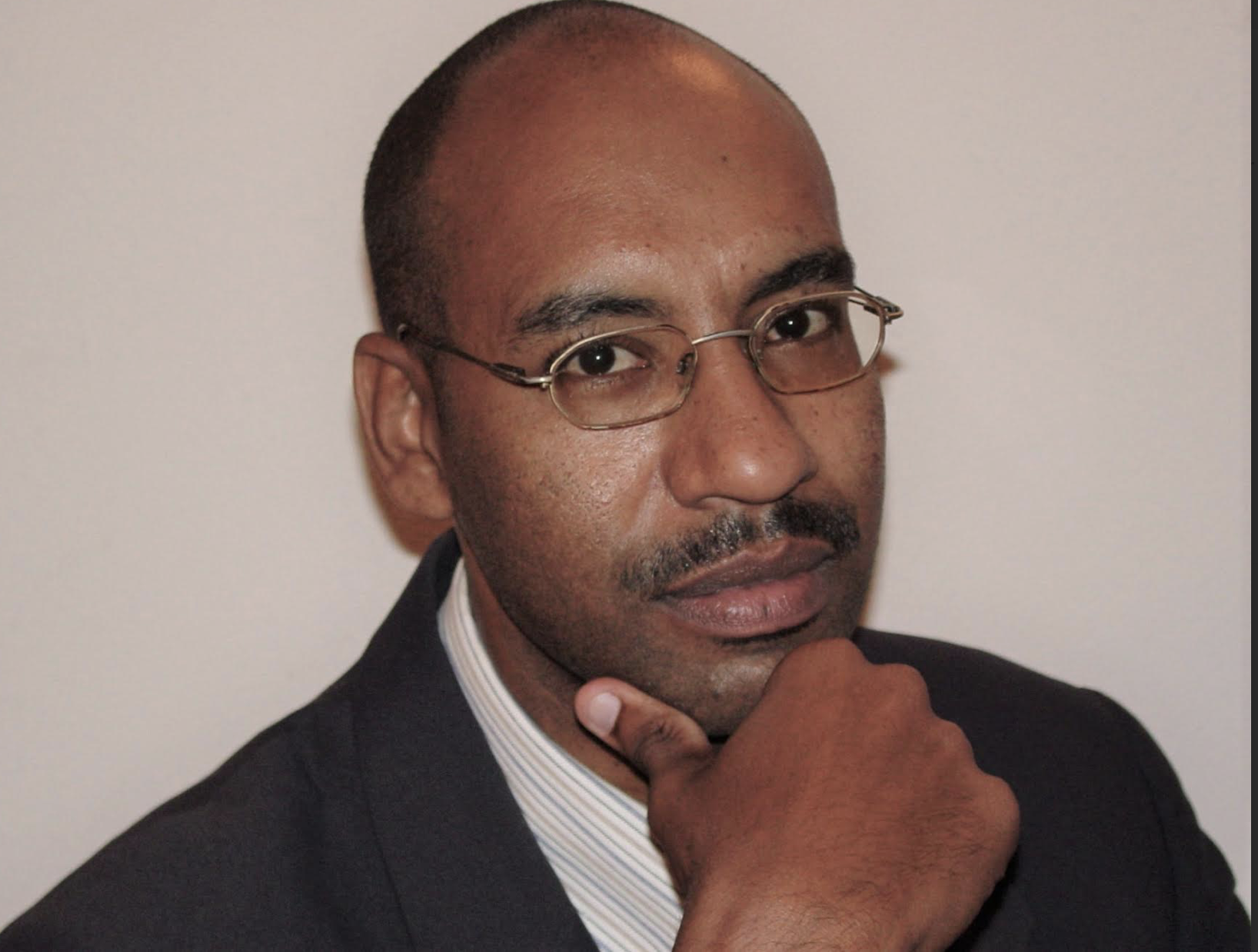
Minister of Health Donville Inniss

Over the past few months there has been much discussion and media coverage of issues related to health care policy in Barbados.  Despite the volume of media coverage I remain unclear as to a number of issues, which  restricts my ability to adequate assess the health care policy issues being raised.

From what I have been able to glean there are three issues out there:

  1. Only nationals and permanent residents are now entitled to free health care in Barbados.
  2. Persons eligible for free medications who choose to purchase such medicines at a private pharmacy are now required to pay the processing fee charged by the pharmacists to public patients and previously paid by the government.
  3. A number of changes have been made to the drugs on the formulary and medicines previously available free of cost are no longer available free of cost.

I would like some clarity on the following issues:

  1. Was residency status ever a requirement  for free health care in Barbados?  If so what residency status entitled a person to to free health care ?  The answer I am trying to get at here is whether or not we have a change in policy or enforcement of a previously existing policy?  Some follow up questions from a serious media outfit trying to inform its readers and/or listeners on issues, would be , why was the policy changed if it was in fact changed?  If there has been no change in policy, why was the policy not previously enforced and why is it now being enforced?  I am sorry, but I expect half decent journalists to seek out answers to these questions  if they are running stories on an issue.
  2. What is the purpose of the processing fee for public patients at private pharmacies?  Is it a fixed fee, a sliding scale or what?  How much is the fee?  The answer  am trying to get at here is why are the private pharmacies charging a fee at all for public patients, and how much  the government is saving by introducing a measure that will clearly generate some degree of inconvenience and or cost to persons.   Is the tax payer being fleeced by the private pharmacies?  Is the government being penny wise and pound foolish?  Is the policy change likely to impose a major financial burden on public patients choosing a private pharmacy? I am amazed that no such questions were posed to the Head of the pharmacy body quoted at length in a front page story in one section of the media on Sunday May 29.  As  a lay person reading that story the solution for the private pharmacists seemed obvious to me.  Wave the processing fee and get back the business.   I am sure I am way off base, but despite massive coverage of the issue I am unclear on a number of relevant issues.  I am sorry, but I expect half decent journalists to seek out answers to these questions  if they are running stories on an issue.
  3. Are there brand name and/or  generic alternatives available under the formulary to the drugs removed recently removed from the formulary? How many such alternatives are there in most cases?  Are there conditions previously covered from which there are no drugs on the formulary?  How much money is the government expecting to save from the changes to the formulary.  Even though I am personally inconvenienced I accept that you cannot run a free drug scheme without taking  advantage of opportunities to source drugs at a lower cost.  Alternative drugs don’t work well for everyone, but the answer I am trying to get at is whether or not patients have at least two or three alternatives to the drugs removed from the formulary?  Are doctors and pharmacists making patients aware of these alternatives (if there are any).  I am sorry but I expect half decent journalists to seek out answers to these questions and publish them if they are running stories on an issue.I mean despite all the coverage and discussion there has not been a single story about the merits of generic versus brand name drugs.  The newspapers and call in programs are not serious.

I am really disappointed in the media coverage of this most serious and personal of issues.  Health care is not an issue to sensationalize or focus on headline grabbers.  It requires some serious thought and discussion.  I am at the stage where I wonder what is the point of buying a paper.


Discover more from Barbados Underground

Subscribe to get the latest posts sent to your email.

181 responses to “Demystifying Government’s Healthcare Policy”


  1. We have had a lot of talk about entrepreneurship recently. This is a chance for any enterprising pharmacist, hopefully young and black, to grab some market share by waiving the processing fee and picking up all that business going to the government pharmacies.

    Go for it young, black pharmacist.


  2. These opportunities to grow your business don’t come around every day. So please, my young black pharmacist, or ven old black pharmacist, I am looking for your ad next week.

    I would come and buy from you.


  3. I would also want to find out the profit margins for the pharmacists on the older meds that were on the formulary. Do they have a financial incentive to push the new meds which I presume are cheaper?

    This is BIm though, no one is going to want to ask questions of medical people.


  4. Doesn’t the drug service fulfil/redeem the drugs on the Formulary and the dispensing fee represents the mark-up/profit on the transaction for the pharmacist? If so OLD SCHOOL your premise is flawed.


  5. The following comment was made on a related blog:

    Happy to Say | May 16, 2011 at 3:27 AM |

    I decided to take the time out to read and review comments made by Minister Inniss on several matters recently and must say that he really has been mis-interpreted and mis-represented on many fronts.
    1. Barbados Drug Service has over the past decade or more had at least 70% of its drugs being generic as opposed to branded drugs. There has been no changes here in principle. The efficay of all drugs on formulary are tried and tested and proven. Barbados does not engage in buying cheap and ineffective drugs from inferior plants.
    2. BAMP, Pharmaceutical Society, patient advocates, etc were all represented on the committee that advised on changes to the formulary.
    3. Minister Inniss has consistently indicated that there has always been and will always been changes to formulary as new info comes to light.
    4. All illnesses previously covered remain covered under new formulary. people just need t consult with their doctors.
    5. There is no new policy in terms of who is entitled to free healthcare in Barbados. It has always been citizens and permanent residents. The Minister of Health has simply decided on the kinds of ID that would be accepted in state owned healthcare facilities as proof of citizenship or residency.
    6. There is no way that any healthcare worker would know if one has been here for 40 years or 40 days! If people feel entitled to free healthcare and it is so important then why not go to the immigration dept and sort themselves out. I checked and there is no major backlog in appplication for residency in Barbados. I suspect it is a case where many people are not bothering to apply.
    7. Those who are entitled to free healthcare are also entitled to free education, welfare, etc.
    8. Paying taxes and NIS have never been related to free access to healthcare or education. If so, my wife who has never worked should never have received open heart surgery. and she was borned here and has lived here all her life. My 3 children got free education all their lives, right up to UWI. I never paid enough in taxes to cover such.
    9. I read his recent speech and Minister Inniss never spoke to any one being overcharged, he was very clear in reference to those who should be receiving free healthcare but are being charged high fees to have procedures done in QEH. eg. those who should receive surgeries but are being told to find the money to pay for it or wait 18 months. That is what he complained about and asked CEO to investigate. this is different than what Mascoll and Jerome are talking about.

    I admire Minister Inniss. he has certainly faced reality and is prepared to do the right things for the benefit of all. he can be cursed and threatened, but he is definitely a politician who is not afraid o make unpopular decisions which redound to he benefit of all. He has my full support.


  6. My premise may be false, but if it i, its out of ignorance. Like Trained Economist I am clueless as to what the processing fee represents.

    David can you shed any light on the processing fee, what is it ofr, is it fixed or variable? If its varibale, why?

  7. TRAINED ECONOMIST Avatar
    TRAINED ECONOMIST

    If the info in Happy to say is correct then the Nation and Starcom have been misleading the country.


  8. Read BGIS Report

    “The introduction of the dispensing fee, effective April 1, 2011, represents an attempt to rationalise the Barbados Drug Service expenditure. This new system affects patients accessing services in the private sector only, and will see the Barbados Drug Service continue to pay for the cost of the drugs, but patients will pay the dispensing fee charged by the pharmacy. That fee used to be paid by the Barbados Government, as part of the package to pharmacists participating in the Special Benefits Service. It must be noted that patients filling their prescriptions in the public sector will not be required to pay the dispensing fee,” she explained, adding that it has been projected that government will incur savings of about BDS$12 million annually.

    http://www.gisbarbados.gov.bb/index.php?categoryid=13&p2_articleid=5435


  9. Another BGIS Report

    Reminders From The Barbados Drug Service
    By Lisa Bayley
    Published: October 15, 2010

    The Barbados Drug Service is taking measures to ensure its products and services are not abused.

    Medication will be given free at point of service, to citizens and permanent residents of Barbados, ONLY.

    Only one of the following approved forms of identification will be accepted for persons to benefit from “free” medicines under the Barbados Drug Service’s programme. These are a Barbados Identification Card (ID) which identifies the bearer as “Barbadian”; a Barbados Passport with the Barbados National Registration number; a Barbados Identification Card plus a passport of citizenship with the stamp from the Barbados Immigration Department that reads: “I hereby certify that the holder is a Permanent Resident of Barbados”, or; Barbados Identification Card plus a Permanent Resident’s certificate issued by the Immigration Department.”

    The approved form of identification must be shown to the pharmacist on each visit, for both original and repeat prescriptions.

    Additionally, parents are encouraged to register their children within two weeks of birth for a Barbados Identification Card, as medication will not be issued without the child’s ID card. The one year grace period has been cancelled.

    Persons are also advised to ensure that the name indicated on the doctor’s prescription, is as it appears on the National Identification Card, as prescriptions, written in the names of aliases, will not be honoured.

    They should also ensure that the name indicated on the National Identification Card is as it appears on the Birth Certificate. Individuals are encouraged to contact the Chief Electoral Officer immediately, should there be any differences in the information stated on the National Identification Card, to have that card corrected.

    The Ministry of Health has reminded Barbadians that these policies are not new, and are being highlighted for the information of the general public, in order to facilitate the smooth operation of the Barbados Drug Service. The Ministry of Health thanks the public for their cooperation and understanding in this matter. lbayley@barbados.gov.bb

  10. TRAINED ECONOMIST Avatar
    TRAINED ECONOMIST

    So am I to understand that the processing/dispensing fee is paid by all customers, however, the government will now no longer pay the dispensing fee for its customers.

    Can anyone shed some light on Old SCHOOL’S queries as to whether the fee is variable or not?

    I take OLD SCHOOL”s point that as a business the pharmacy should be asking whether or not the fee is worth the lost business, and whether or not they can do anything with the fee to recover some business. If its variable then maybe make it fixed.


  11. @Trained Economist

    http://caribgp.org/article/do-we-need-“old”-drug-formulary-format-barbados

    In his recent presentation of the 2010 to 2011 Budget, the Minister of Finance in Barbados Mr. Chris Sinckler noted that, from April 1st 2011, persons who have their prescriptions filled in private pharmacies will pay a dispensing fee as follows:

    Table 1.

    Drug cost. Amount to be paid by patient (Dispensing fee).
    Under $ 10.00 $ 5.00
    $ 10.01 to $ 20.00 $ 7.00
    $ 20.01 to $ 40.00 $ 12.00
    Over $ 40.00 30% percent of the cost of the drug.

    (For drugs under $5.00, the dispensing fee will be greater than the drug cost, for drugs between $20.01 and $24.00, the dispensing fee will be more than half the cost of the drug.)

    These dispensing fees will only be applied to drugs on the National Formulary, and only apply to patients who choose to have their prescriptions filled at the private pharmacies.

    It is reasonable then to expect that, when a physician is about to prescribe, that some patients will ask: how much will that medicine /those medicines cost? Prior to April 1st 2011, many patients, particularly those with chronic non-communicable diseases like diabetes, hypertension, heart disease and hypercholesterolemia, obtained all their medications for these conditions free of cost. Patients with asthma also got a supply of anti-asthma medication free of costs, and the over 65 years got the medication for their arthritis free. But many patients perceive that different pharmacies attach different costs to the same medicines – perhaps we need drug-price inspectors, in the same way that we are supposed to have food price inspectors- and the patient would at least have a ball-park figure of his medication costs.

    The 28th edition of the Barbados National Drug Formulary, which covered the period April 1st 2008 to March 30th 2009, listed drugs as followed:

    Drug X

    Indications: Disease yy. Used with ++++++++.

    Cautions/Side Effects: Take with meals to decrease G.I. side effects. Monitor for hematological effects.

    Dose Range: 15mg (base) daily for 14 days. May be used for up to 21 days.

    Preparations:
    Tablet, 25mg
    Drug X (STP/COL); 0.0942 per Tab. (30)

    In this case, a drug selected at random from the Drug Formulary 2009-2010, the listing shows, among other pieces of information, the cost of the drug, so that the physician could then work out the expected cost of a 14 (or 21) day course of drug X. Then, using table 1, the physician can advise a patient under 16 years and over 65 years how much they would be asked to pay (the dispensing fee) when they present the prescription to their private pharmacist. Patients between 16 and 65 years will have to pay both the drug cost and the dispensing fee.

    On the other hand, the most recent edition of the Barbados National Drug Formulary (but not formally called the 29th edition), perhaps termed MPC # 31, a different format was used to lay out the drugs:

    The Barbados Drug Service.
    The following list shows the products which are currently contracted and those which will be available in the new contract.
    Products Available in MPC # 30 Products Available in MPC # 31
    4/1/2009 To 3/31/2010 1-Apr-2010 To 1-Mar-2011

    Drug X
    Drug X Tab (STP/COL) Drug X Tab (STP/COL)

    The listing of drug X (the same drug was selected in both years) in MPC #30 excludes any important information on the drug, and importantly does not provide the physician with the information to advise the patient on drug costs.

    Many patients, and perhaps many physicians, join the Ministers of Finance and Health in being very concerned about costs of the components of Health. In this context, there will be great interest in the cost patients will have to pay for their medications at the private pharmacies.

    The Minister of Health, in his contribution to the budget debate, did suggest that efforts will be made to improve the public pharmacies. At the onset, many patients perceive the public pharmacies as places of prolonged waiting periods and an inadequate supply of medications. Many years ago, when a government appointed commission (“the Richie Haynes commission”) evaluated the Queen Elizabeth Hospital (QEH), they evaluated among other things the waiting periods at the Accident and Emergency Department. In spite of intermittent declarations of improvements of this Department, the experience of many patients (anecdotal evidence), the experience of private physicians who sometimes need to refer patients to the A&E Department, and the fact that the formal ‘waiting times’ evaluation has not been repeated (or at least made public, if it has), all suggest that there is no formal evidence to suggest improvement (and limited pieces of evidence all suggest deterioration). But if there is going to be claim of improvement in the public pharmacies, it must be formally evaluated, and perhaps compared to similar studies in the private pharmacies.

    Similarly, the cost of saving on the dispensing fee has to be measured against possible fall off in medication usage, as many patients may be unable to pay these new costs for their medications ( while many other costs around them also rise).Costs may be shifted from primary care to the high cost Tertiary Care at the QEH, as patients suffer complication associated with a disruption in their therapeutic regimes.

    A document from the Barbados Drug Service dated December 17th 2010 and titled “Revised Formulary “, lists a summary of the drugs that will be deleted from April 1st 2011, and these drugs will not be available free of costs to patients, and will no longer be stocked in public pharmacies. [This already tells us that the pharmacies will be “improved” by having them stock less drugs.] Like MPC # 31, there is no listing of prescribing information, and no listing of costs of drugs. This document lists 7 pages of drugs, currently available, that will no longer be available after April 1st 2011. Should any patient be particularly conscientious about drug costs, he/she may still have to attend the public pharmacies for the ‘free drugs’, and attend the private pharmacies for the ‘must pay for’ drugs. Since the elderly are the group most likely to be on multiple medications, they will be negatively affected in two ways: financially, as they will have to pay for many drugs [even though the Ministers of Finance and Health say that this is an unavoidable side effect of the world wide recession], and now having to wait, each month, in both a line at a public pharmacy and in a line at a private pharmacy to pay for their medications.

    This “Revised Formulary” document also notes that the amendments “will have significant implications on overall prescribing”: this is a competitor for the understatement of the decade. In response to an epidemic of chronic diseases, physicians have been encouraged to follow Caribbean or International guidelines that set specific target blood pressures, blood sugars and cholesterol levels. These guidelines match disease and drug class, not disease and drug cost or availability. Now physicians are being asked to ‘familiarize yourself with the changes’, in a three month period, and ‘respond accordingly in your prescription writing’. The changes set out all the drugs that would no longer be available, and not the drugs that would be. We are being encouraged to ‘mix and match’ drugs to fit patient budgets and diseases. And we are yet to see what drugs will be on the formulary, and how much they will cost.

    When the 2011 to 2012 Formulary comes out (if one does indeed come out) it is hoped that individual drugs and their costs are included. Patients are now being asked to pay for many medications for the first time; at least they should be informed about the costs they are likely to incur. Some patients may even have to decide, at the time when the prescription is being written, what medicines they can and can’t afford, irrespective of the consequences on individual health. In this context, we need the ‘old formulary format’, so physicians can be informed, and be able to to inform patients of the drug costs.

  12. Random Thoughts Avatar
    Random Thoughts

    Would wunna stop talking about free medicine, free dis, free dat when de taxes here giving me goadies (which de gov’ment ain’t gine treat free)

    Ain’t nuthin’ free.

    We paying for every damn thing thru’ high TAXES.

    An politician who come nna me yard talking about free anthin gine get a slap aroun’ ‘e head.

    Can we start using the term TAX FUNDED.

    Principally to remind the politicianswho is de bodies who paying de bills.


  13. I went to restock my medication recently and was informed that the major drugs I have to take has been replaced by an alternative tablet to one that I had to stop using before. This means i now have to purchase the drug I was advised to use and that cost is over $ 100.00. Certainly, it appears the government is reying to lessen the old age population of the country in an effort to steady the ship. The elderly, who has contributed so much to this country, is now being shortchanged by this government.

  14. TRAINED ECONOMIST Avatar
    TRAINED ECONOMIST

    I hope the projected savings are net of any increased costs to the state of persons migrating to the public pharmacists. if they are net of such costs, then I would say its a policy worth considering on economic grounds. Its clearly a politically risky one.

    I am still curious as to some details on this dispensing fee.
    Why is the mark-up not just part of the price of the product as in almost all other products. The pulling out of the amount and calling it a dispensing fee suggests something other than a markup to someone like me.

    Does a purely private customer pay a dispensing fee as well? If they do it seems a most unusual way to treat a mark up.


  15. @Trained Economist

    In the perfect scenario the non formulary customer who attends the private pharmacy should pay cost of drug i.e. the amount the government would reimburse the pharmacy plus mark-up.

    Whether the markup equates to the sliding scale as outlined above in the the Dr. Colin Alert note on the matter is not known to BU.

  16. TRAINED ECONOMIST Avatar
    TRAINED ECONOMIST

    Who is the article by David?

    The artcile does not seem to address the issue of whether or not there are publicly funded alternatives to the drugs removed from the formulary.

    Medicine is a very personal thing and I am very sympathetic to affected persons. But it seems that if we follow the logic of much of the discussion then there should never be any changes to the formulary (except on the recomendation of peronsla physicians) given that some sizeable percentage of people will always be very atached to the current drugs they are taking.


  17. @Trained Economist

    Check the link at the top of the article, it looks like it was written by Dr. Colin Alert who coincidentally is part of the panel discussion put on by the Nation Newspaper at St. Leonards on Wednesday night 7.30PM if memory serves to discuss rising health care. Let us give the Nation credit eh?

  18. TRAINED ECONOMIST Avatar
    TRAINED ECONOMIST

    I hope we get some clarity then. From following the issues in the USA, I wonder if we ask enough questions about doctors and their prescribing practices.

  19. TRAINED ECONOMIST Avatar
    TRAINED ECONOMIST

    The sliding scale does not read like a mark up. Maybe someone can help us.

  20. TRAINED ECONOMIST Avatar
    TRAINED ECONOMIST

    I am trying to reconcile Alert’s comments with point 4 of “Happy to say.”

    Happy to say , says that all previous conditions are still covered by the formulary.

    To a lay perosn like me, if that is correct, then having to pay for your primary medication is a matter of you and your doctor deciding that al alternative medication for the same condition is the one you should use.

    Would you say thats a correct interpretation David?

    If Alert is correct than Happy to say is wrong or vice versa.


  21. @Trained Economist

    You interpretation is ours. It would be up to the doctor to prescribe an alternative drug generic or otherwise.


  22. Is it then accurate to say that persons are being forced to pay for their meds?


  23. @OLD SCHOOL

    They have been reports that some of the generics have gotten bad reactions and doctors when consulted have prescribed the drug removed from the formulary. In those cases one can say some patients have been forced to purchase.

  24. Just Only Asking Avatar
    Just Only Asking

    To All

    Does patented drugs have a life span to recover cost and generate a return on investment for the debelopers?

    Doesn’t a generic drug have to adhere to estabished pharmacobia standards like patented drugs (hope i got the spelling correctly)

    Is it possible that after a patent has expired that the same ingredients that were in the patented drugs could be in the generic drug?

    It is possible that the owners of a patented drug whose patent has expired could now be involved in the production of the patented drugs directly or have invested interest in it.?

    Are you aware that some people would have allergice reaction to some drugs and some of it could be casued by a psychogenic factors.

    Are you aware that it is in the interest of some pharmacist to ensure that the new system does no work, so that they can have the opportunity to rip off the government like they did over the years?


  25. This is a tough issue. I can agree that in those cases persons have been forced to pay. But what is a government to do? Keep drugs for every preference or personal make up on the formulary whatever the cost?


  26. Of course the way things work we are only going to hear from those persons where the alternative did not work well.


  27. Generic drugs are simply drugs whose patents have expired.


  28. Off topic

    Is it possible that we are verge of a newspaper war? Did any catch the Advocate today (Pg. 17) where they disputed the Nation’s readership numbers. To add insult to injury they have a photo of Flying Fish wrapped in the Sunday Sun.

    Dems fighting words.

  29. TRAINED ECONOMIST Avatar
    TRAINED ECONOMIST

    David, my concern is that we are still getting a lot of opinion and personal experiences as distinct from hard information that allows informed judgement.

    I fear we are going to get a lot of the same at the town hall meeting.

    I find Alert’s piece somewaht disturbing. It seems to fit into the mould of “don’t dare question or mess with medical practitioners.”

  30. Just Only Asking Avatar
    Just Only Asking

    Remember that doctors sometimes dont take time to know what are the drugs in the drug formulary and presribe because they migh have been introducted to a particular drug by the drug rep, or they might have been given some of the same drugs as samples and they dispense them to their patients. Remember how he pharmaceutcal companies operate in the developed counnties, and do you think their strategies would be different in the Caribean?


  31. @Trained Economist

    Perhaps if you have time you should attend St. Leonards on Wednesday night, the minister, Alert even Sparman will be at the had table.

    Go and ask your questions.

    You are correct we are at the stage where hard data should be available to inform any tweaks which are required to make the system work better.


  32. @Just Only Asking

    You are correct that doctors are wined and dined by pharmaceutical agents and therefore would have those that are drugs waved under their noses top of the mind.

    This health care business can get truly complicated.

  33. Just Only Asking Avatar
    Just Only Asking

    If generic drugs patented whose patent expired, why the hullbullo about generic durcs when they have the same ingredients of the espired patented drugs. People need to be educated about this including the Scout.


  34. I have a friend who is a pharmacist, a diehard Dem, who is now under great pressure. I told him you wanted change and you got it.

    The problem with all this confusion is that the government started wrong and will end wrong. Trying to cut 12 million dollars from the drug service to end up with all this confusion is not worth it.

    Not when they took 30 million dollars out of the national budget to pay for stupid constituency councils that to date, not one of them seems to know what the hell they are supposed to be doing other than securing votes for the DLP.

    One council was giving out clip boards to 11 plus students, one is cleaning up snails, one is searching for the oldest twins…………….pray tell me, is this their mandate? And to think that this is costing 30 million dollars per year!!! Another 6-7 million dollars for summer camps which is another way they are sharing the fatted calf to their supporters by way of catering and another 5-6 million dollars to allow children to joy ride on Transport Board buses.

    Tell me if scrapping these three projects wont help buy the drugs and stop people from complaining daily. I am all for reforming the formulary if there is excessive wastage but not to make old people who can least afford it having to pay for their medication and adding to their already stressful lives dealing with the HIGH COST OF LIVING. It is just a matter of choosing your priorities which this government seems not to be able to do. These changes seem not to have anything to do with reformation only cutting costs.

    Thank God, so far I am lucky that I do not have to take any medication daily but my spouse has to take one tablet daily. Sometimes the pharmacist dispenses it without the fee, next time they dont have it and I have to purchase it. Now the doctor has changed the medication to one on the formulary but we asked for the old one and pay for it. Thank God, we can and I have sympathy for those who are burdened with the added costs.


  35. In fact brand name drugs are given a lead time in the market to recoup the investment, it also allows it to build the brand.

  36. Just Only Asking Avatar
    Just Only Asking

    Trained Economist

    Gone are the days when people just accept what doctors told them. I cant miss that meeting for all the tea in China because all the lies and misconceptions will be revealed.

    I got to be there.


  37. @Prodigal Son

    You are always full of stories.


  38. Everyone is focused on the issue of drugs dispensing fees etc. How about hospital care and the access to quick medical intervention?

    Based on some information I have I don’t think it’s a stretch to write that it’s a user pay system if you want a major medical procedure done within a short time frame.


  39. @Sarge

    You are correct. There is no doubt the minister will have to make some adjustment as we have seen already with the recruitment of more pharmacists at the polyclinics etc.

    What is funny is that many of the people complaining will sit in a doctor’s office for 1-2 hours and not a whimper.

  40. Just Only Asking Avatar
    Just Only Asking

    prodical Son

    You know why they are catching their ass, a lot of them openerd pharamcies with the specific intention of milking the gravy sytem, they never had a proper business plan involving a mixed business strategy.

    In a lot of cases some of them double billed because there was no efficient computer system. THE GRAVY train must dry up some time.


  41. maybe Sparman will lead the way and wave the dispensing fee or set a flat fee.

    Come on Sparman, we need some innovation here.

  42. Just Only Asking Avatar
    Just Only Asking

    @David

    You got that correct, sometimes you go to a specialist with a fixed time and some time you have to wait hours, and dont talk about dentists.

    The problem I have with some people is that they are prepared to accept thw wait in doctors office, but not in government. I am bot saying that there could be improvement, any new system will have challenges.


  43. The issue here like most things in Barbados nowadays is politics.

    There is no issue where a bipartisan approach is deemed to be better.

  44. Just Only Asking Avatar
    Just Only Asking

    I want people to know that the Barbados drug service is used as a centre of excellence by the internatioanal health community and its model has been adopted by some countries.

  45. TRAINED ECONOMIST Avatar
    TRAINED ECONOMIST

    Prodigal, there is no doubt that the policy is politically problematic for the government. But politically problematic does not mean that it is the wrong thing for the long term good of the country.

    The experience of many other countries suggests that if health care costs are not carefully managed they can be a road to fiscal ruin. I believe in universal health care systems. I also believe that proper management of costs is essential if a country is to maintain universal access to good quality health care.

    I want to be able to assess if these are some steps in the right direction in terms of cost management without compromsing quality, or if they represent a tep in the direction of rationing access to the detriment of the poor.


  46. I said I have no problem with correcting the ills and flaws in the system to cut out the wastage. I am all for that, I try to cut out wastage too in my budget and especially in food.

    What started out as cutting out those who were not permanent residents has now turned into a circus where old people have to wait 4-5 hours for medication, that they cannot get the medication to which they are accustomed to taking and that if they can, they have to pay for it with money they dont have.

    What does it say about the stress of living here when people prefer to sit for 4-5 hours waiting on a government pharmacy rather than paying a few dollars and get served in a few minutes?

  47. Just Only Asking Avatar
    Just Only Asking

    old School

    Only pharmacies involved in the Special Benefit system under the BDS can charge the dispensing fees, there is nothing which say that the pharmacies have to charge the fee they cannot charge more than what was proscribed, why dont they decide to either charge less or waive the fee to recapture business, instead of getting behind the scene and stirring up trouble.

    It is clear that they are not really business people .

  48. Just Only Asking Avatar
    Just Only Asking

    @Prodical Son

    I cant see it taking four or five hours for someone to be served, you seem to have perfected the art of exageration.

    If old people chose to pay that their choice, but i can assure you that what kinks that are there will be ironed out and you would not have any more stories to tell.

    You should attend the meeting wednesday to tell your stories. if you would stop seeing eveything from a politcal spin, you would be able to logically develop your arguments.


  49. […] policy in Barbados.  Despite the volume of media coverage I remain unclear as to a number … Continue reading → This entry was posted in Top stories and tagged barbados, Continue, Discussion, economist, […]

The blogmaster invites you to join the discussion.

Trending

Discover more from Barbados Underground

Subscribe now to keep reading and get access to the full archive.

Continue reading