



 When journalists can obtain public records, they need not rely on the whims of a government source to report on government actions and activities, and they can better disclose how tax dollars are spent and how policies are made and implemented – Media Law Handbook [2010]

The advent of the Internet means that the often held view according to New Yorker magazine contributor A.J. Liebling that, “Freedom of the press belongs to the man who owns it” is no longer a rule of thumb. The increasing popularity of blogs and other social media players have given a voice to the PEOPLE. Compared to many developing countries, Barbados falls short in its failure to enact Freedom of Information laws (FOIA), a key prerequisite to facilitating freedom of expression. The government is on record that FOIA is in the pipeline, to be brought to parliament soon, one senses this is something it will action when it becomes politically expedient and not out of a sense of urgency to protect a fragile democracy.
The frightening reality remains that local journalists have to rely on government sources to confirm or deny information before releasing to the public. In Barbados this represents a worrying situation given our small size which breeds the opportunity to be victimized, manipulated or encourage corruption. While admitting that FOIA is not a panacea for all our problems, such legislation if enacted, would update existing laws to reflect that we are operating in the 21st century. The accepted practice of local media editors to ‘dumb down’ stories because advertisers may become offended occurs, is that not self censorship and a threat to democracy?
The Internet has given the opportunity for ordinary citizens to challenge power structures which have been controlled by interest groups with deep pockets.
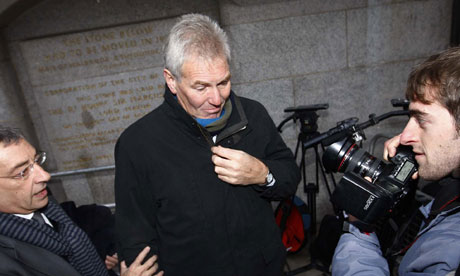
A classic case of how an effective media can perform its role was demonstrated last week in the United Kingdom – Chaytor, 61, became the first politician to be convicted and sentenced over the MPs’ expenses scandal. You may recall that Chaytor submitted bogus invoices to support claims totalling £22,650 for IT services and renting homes in London and his Bury North constituency. This is an example of the UK media (The Telegraph) acting independently. Besides the fact it sets precedent for common law countries, it also highlights the need for another missing piece of legislation to be enacted in Barbados, Integrity Legislation. Barbadians had been promised this legislation in 100 days on the government assuming office – totally unrealistic – although to the government’s credit it has finally been brought to parliament for debate.
To enter the realm of first world status which our politicians preach about we are left to wonder why we continue to hold on to the vestige of what is archaic and irrelevant. This is happening at a time when our Parliament is saturated with members of parliament who are lawyers. Perhaps our policymakers and media players know why they have been reluctant to bring Integrity Legislation and Freedom of Information to the fore.


The blogmaster invites you to join the discussion.