



Submitted by Yardbroom

When Marcus Mosiah Garvey boarded the SS Trent, on the 17th June 1914, to cross the Atlantic and return to his native Jamaica from London; he had spent two years in England, and was about to start work on the draft of his pamphlet: “A Talk With Afro-West Indians” in which he wrote:
“Sons and daughters of Africa, I say to you arise, take on the toga of race pride, and throw off the brand of ignominy which has kept you back for so many centuries. Dash asunder the petty prejudices within your own fold; set at defiance the designation of “nigger” uttered even by yourselves, and be a Negro in the light of the Pharaohs of Egypt, Simons of Cyrene, Hannibals of Carthage, L’Ouvertures and Dessalines of Haiti…..Blydens of Liberia….and Douglasses and Du Boises of America, who have made, and are making history for the race, though depreciated and in many cases unwritten.”
Garvey’s sojourn in London and other European capitals, had not been a total success, as he had been reduced “to asking for assistance from the Colonial Office,” for his repatriation to Jamaica. His older sister Indiana, a domestic servant, also in London at the time, was in a similar predicament and therefore unable to assist him.
If in financial terms Garvey had been unsuccessful, in other ways he had gained much from his London experience, to quote Garvey: “I read, Up From Slavery ( by Booker T. Washington b1856-1915) and then my doom – if I may so call it – of being a race leader dawned on me”.
Although Garvey’s race consciousness seeds were sown in Jamaica – I will return to that episode later – it was in London, that his commitment to the black cause, and his dream of the black diaspora’s return to Africa, became firmly rooted. Garvey has been given much credit – and deservedly so – for his back to Africa campaign. However, it was another black son, the scholar Edward Wilmot Blyden (b1832-1912) author of : “Christianity Islam And The Negro,” published in 1887 – “incidentally the year of Garvey’s birth” – who was an early advocate, of repatriation schemes for the black diaspora to Africa.
Garvey was therefore following in a furrow first ploughed by Blyden, before Garvey was born. Perhaps it is worthy of mention, that Garvey – when in London – had asked the ” British Museum Library for a reader’s pass; in support of his application, he cited a need to examine the works of the Liberian scholar ( born in the US Virgin Islands) Edward Wilmot Blyden.” He was granted a month long temporary ticket. Before I venture into the influence Blyden’s writings may have had on Garvey, it is worth mentioning Garvey’s experience in Jamaica, which possibly later influenced his avowed public stance.
“As a young boy Garvey was friendly with Reverend Lightbourn’s daughter; though she was white and he was black, they had played throughout childhood with no regard for difference of their races. All that changed when the girl reached fourteen. She informed him that she would be leaving shortly to continue her education in Scotland, and that though there was every possibility that she would return to the island – Jamaica – later, her departure marked the end of their friendship. Garvey was perplexed as to why this should be; when he pressed her for an explanation, she confessed that the decision had been made for her by her father. The Minister had instructed his daughter “she was never to write or try to get in touch with me, for I was a “nigger”. As told by Garvey, it had never occurred to him before that he was such a thing.”
If a minister of the church could harbour such feelings, and express them in such a way to his daughter of 14 years, it could be reasonable for Garvey to arrive at his later position on race. It may be conjecture to suppose with certainty, that this youthful experience had conditioned Garvey’s mind, but it could be, that later experiences reinforced this early exposure to prejudice. This, coupled with erudite scholarship on black themes by William Edward Burghardt Du Bois (b1868-1963) Edward Wilmot Blyden and less so but also important works of the period by Brooker T. Washington e.g “Up From Slavery” played their part.
Garvey now firmly decided on his future formed the Universal Negro Improvement Association (UNIA). “The Universal Negro Improvement Association’s stated aim” was to establish a brotherhood among the black race, to promote a spirit of race pride, to reclaim the fallen and to assist in civilising the backward tribes of Africa.” Its motto, printed proudly on the letterhead, proclaimed: ” One Aim. One God. One Destiny.” Garvey – acknowledging kinship with the Vatican – suggested that like the great church of Rome, Negroes the world over must practise one faith, that of confidence in themselves with one God! One Aim! One Destiny”.
Although Garvey sought out the scholarship, of the Internationally respected Blyden for detailed examination, there was a fundamental difference between the two. “Garvey saw the Vatican as the great church of Rome.” Blyden saw the reduced state of black people the world over and on the subject of religion: suggested that Islam, with its lack of colour distinction was more attractive to black people than Christianity.” I will not dwell on that difference now, as the focus here is the return to Africa of the black diaspora, within a Pan-African framework.
“Pan-Africanism sees those of African black heritage as one people, part of a global African community and calls for a politically and economically united Africa of unity of African people.” All of those stated views are possible to achieve and some might argue should be achieved, before a thought is given to a return to Africa of the black diaspora.
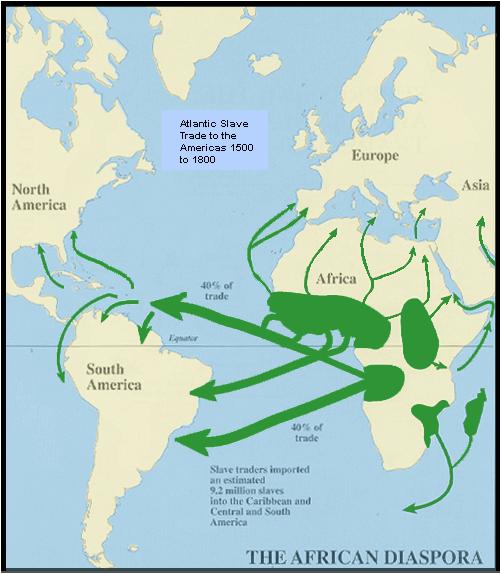
They might further advance the view, in order for there to be a return to Africa of the black diaspora, there must be a host State/s, whose leader/s, Government/s and indigenous peoples are willing and able to accept hundreds of thousands, perhaps even millions of strangers into their midst, whose only link is skin colour. In the African context people from across a river, the next tribe, although speaking the same language can be bitter enemies. There is great loyalty to tribe and historical reasons why this is the case, the diaspora some might argue came about because tribes saw each other as enemies to be sold, they assisted in their capture and they assisted in disposal of them to foreigners, Arabs and Europeans.
This is not to say individual blacks have not been, and will not be welcomed in certain African states, but a wholesale mass migration of a sizeable number of blacks to mother Africa could possibly present problems. If there was ever such an invitation, I certainly have not heard of an African leader who is advocating, that invitation to millions of the black diaspora, backed by his country’s population.
Pan-Africanism is a noble concept and is worthy of pursuance with some vigour, but a return to Africa of the black diaspora is of a different magnitude. There are some who do not see a problem. I ask of them to think of Barbados’ returning Nationals who have spent some years in the UK, America or Canada. They were born in Barbados, speak the same language, have families in Barbados, been to Barbados schools and yet they are some, who have a negative attitude to those sons and daughters of the soil – when they return to Barbados – who have a right by “birth” to live in Barbados. I ask of you why should Africans be more “saintly” than we – Barbadians – are? To ask a people to accept strangers – the black diaspora – they do not know, something we cannot ask of ourselves might be asking, on reflection, just a little too much.
Two of our most distinguished brothers mentioned here, were able to realize that dream. Edward Wilmot Blyden died and was buried in Liberia; William Edward Burghardt Du Bois lived his latter years in (Ghana) Africa and was given a state funeral on his death there. Marcus Mosiah Garvey died in London on 10th June 1940 and was buried there. In November 1964 Garvey’s remains were returned to Jamaica to be reinterred there. His dream of the return to Africa of the black diaspora has not as yet happened; the dream for others was not realized for himself, he never once visited Africa.
With acknowledgements to:
-
Negro With A Hat The Rise and Fall of Marcus Garvey by: Colin Grant, 2008. (A Good read)
-
The Souls of Black Folk: Du Bois
-
Wikipedia



The blogmaster invites you to join the discussion.