




The public outcry surrounding government’s approval of Suarez Circus to operate on the Botanical Gardens grounds near the Belle is understandable. Barbadians are right to question how the approval decision was made, and why a site located in a water zone was approved for the circus before having to be embarrassingly rescinded.
However, the intensity of the public’s reaction raises a deeper question: why are we so outraged in some matters, yet with more weighty governance‑related issues there is barely a murmur? Take the PSV sector, where chaos has been allowed to mushroom into a subculture – one that has negatively impacted a generation of Barbadians. For years, Barbadians have complained about the base behaviour exhibited on public transport, the disorder in the environs of the terminals, the wanton violation of traffic laws, corrupt licensing processes, and a Transport Authority that is a joke. It is no secret that public officials, including a few ministers, have dished out licences to friends.
Even more striking is the silence around critical accountability institutions. Barbados has been without an appointed Auditor General since April 2025 – a vacancy that directly undermines the country’s ability to monitor public spending and detect irregularities. The Auditor General is not supposed to be a ceremonial figure like President of Barbados Jeffery Bostic; it is one of the most important guardians of public trust. The absence of an appointed Auditor General should be raising a serious alarm bell, yet it has not generated anywhere close to the public reaction seen with the Suarez Circus matter.
Similarly, the Public Accounts Committee – one of Parliament’s primary oversight mechanisms – has struggled to function effectively for years. Without a robust PAC, scrutiny of government expenditure becomes a taken for granted routine. The trivialising of a non‑working PAC has serious implications and represents a structural failure that continues to weaken our governance framework. Some say the price of democratic freedom is eternal vigilance.
Then there is the longstanding absence of a comprehensive suite of transparency laws. Successive governments have promised integrity and freedom of information legislation going back to Tom Adams’ days. Then again, a promise is comfort for fools. If we cannot trust our governments to implement and operationalise laws meant to ensure robust oversight, what is the point?
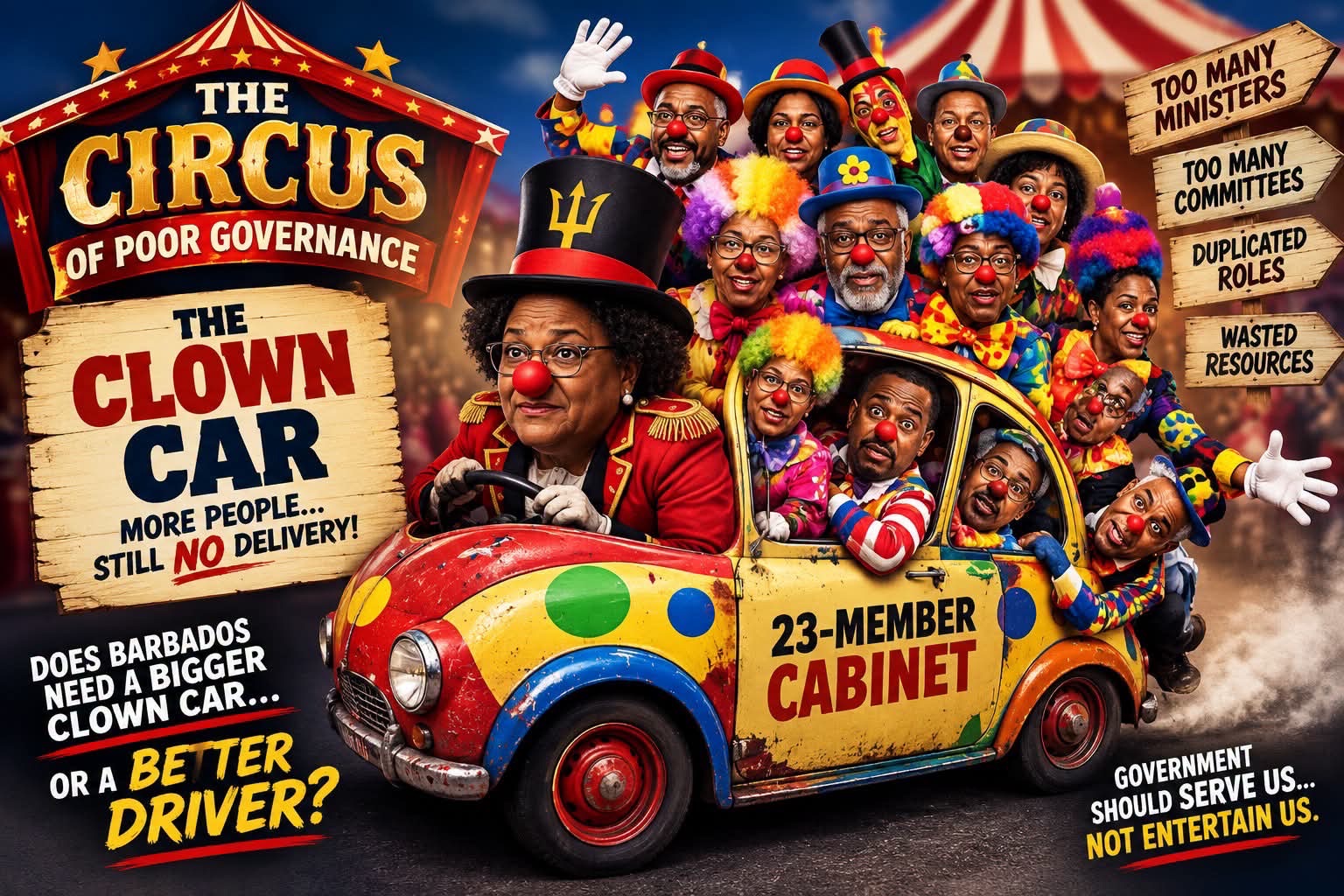
It seems, as a people, we are inclined to react strongly to simple issues that interrupt our transactional way of living, yet remain comparatively quiet about governance‑related matters. The current situation is ripe for government to do what it does best: execute based on political expediency. Yes, the Suarez Circus controversy merits scrutiny; however, Barbados cannot afford selective outrage. The same level of citizen outrage must be directed toward the structural issues that would improve our governance effort.
Are we there yet.





The blogmaster invites you to join the discussion.